Term dates

Term dates are now live on newealingsessions.com/term-dates-and-events-2/

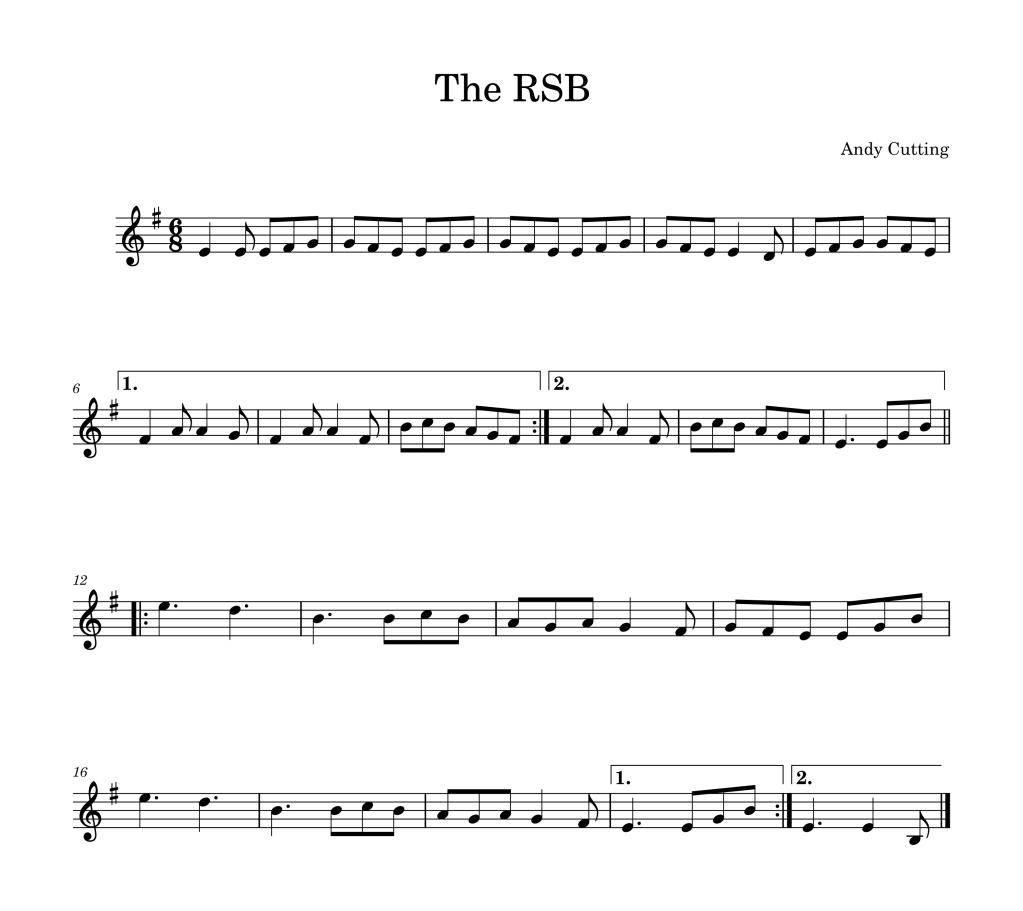
We’ll start up next week, starting with some new tunes before revisiting some old favourites and using them to make simple arrangements for the Ealing Country Dance Club night. More complex arrangements will happen for the Xmas concert at Gunnersbury, date tbc.

Class fees will go up a small amount with the usual concessions for termly and annual subscriptions, and the room fees (which have risen considerably over the last two years) will also go up – we’ll have a chat over how everyone wants to divide those through the year.

Mominette

Mominette by Maxou Heintzen might sound a little familiar if you know the tune The Plane Tree, which is a jigged version of this same tune that is attributed to whistle player and piper Undine Hornby. It is a potential mate for Will’s Way, with other contenders including Harlequin Air – as and when we decide (depending on whether it’s a simple arrangement for dancing to or a complex arrangement for concerts), we will add some alternative chords. Here is a fabulous recording of the tune by Blowzabella.

So what’s the point?

I’ve spent a lot of time recently thinking about the goals of the Monday class and of folk music in general.

  1. We have communal repertoire, shared with others in our musical community and with past and future players. I try to build repertoire in the group, using both older and newer tunes, providing background information where relevant.
  2. We learn these tunes by ear in order to help internalise the tunes, firstly because playing by ear and from memory is a feature of folk music and secondly because internalising a tune makes it easier to then play with the stylistic elements that characterise folk music.
  3. We are afforded some personal autonomy – we add stylistic elements such as ornaments, phrasing and variations to the tunes. We vary the chords, playing both conservative sequences and more advanced sequences that reflect contemporary style. At no point are we looking for one ultimate version of a tune, but rather we should play with various different versions to create an interesting and varied piece of music. I provide various chord sequences and suggest ornaments and other variations (ornaments aren’t often notated in the dots on the site as they should not be considered a fixed element).
  4. Building arrangements: coordinating a relatively large group such as ours means that we fix arrangements for the sake of clarity and ensemble. In building these arrangements together, I hope to provide models that you can then use yourself to make your own arrangements independent of this group.
  5. Promoting traditional music – we aim to perform high quality pieces at Gunnersbury House and at the WLTUC both for our own enjoyment and sense of achievement, and to promote folk music to a wider audience who may not be familiar with the genre. This necessitates rehearsal to maximise ensemble skills, hone listening skills and improve performance techniques.
  6. Enjoyment! Our classes, and the process of playing with others, should be an enjoyable experience. Research has shown that playing music in groups has a number of tangible health benefits including stress relief and increased endorphins.

You may have additional goals or benefits that you have found from playing folk music with others. Feel free to add your own thoughts in the comments!

Constant Billy arrangement ideas

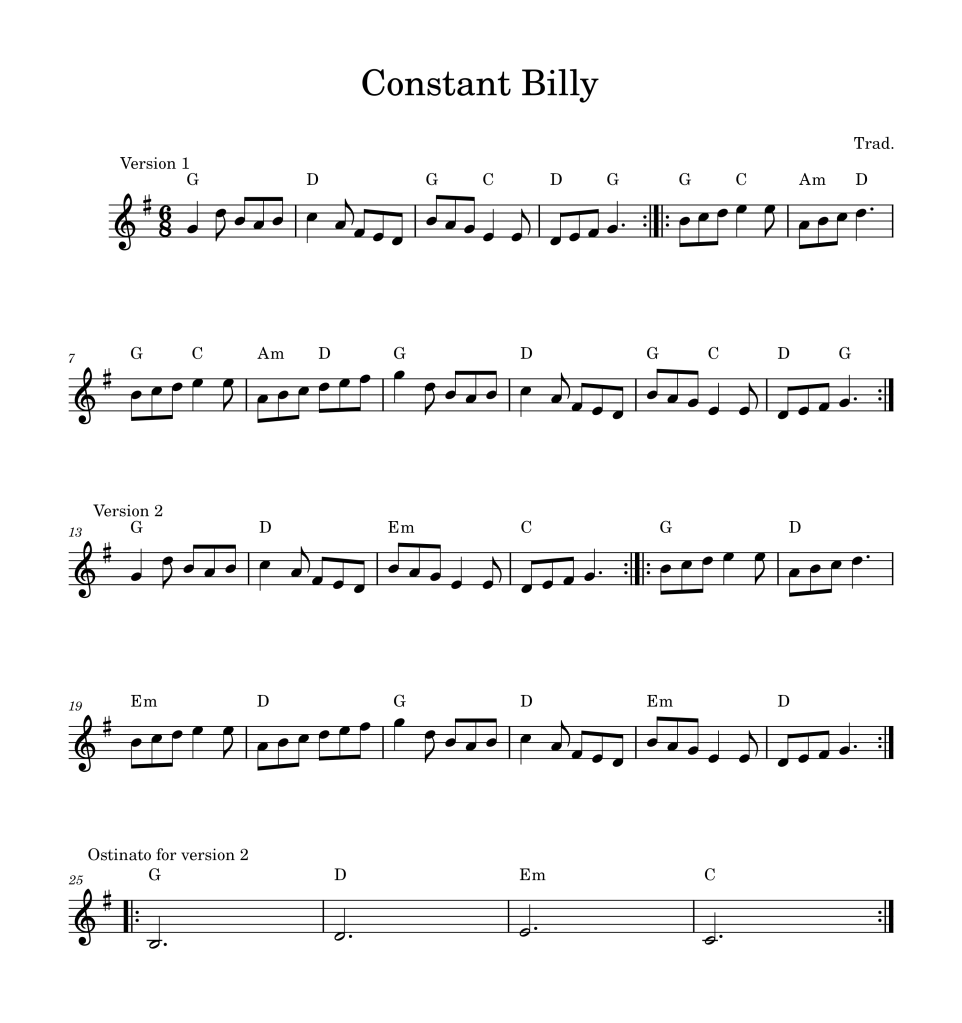
Here is an update of the Constant Billy sheet, with the two new riffs at the bottom. The second PDF below contains the chord sequences and the arrangement that we started on the 12th. The video is of the unrehearsed arrangement that we tried out – it’s not exactly what’s written on the arrangement sheet now, but should give you a feel for the whole piece.

Coronation Day: more arrangement ideas

Here is the recording of Coronation Day tune with the phased rhythmic ostinato that we used in the warm up, inspired in part by Steve Reich’s Clapping Music which was in turn partially inspired by flamenco music.

Here is a video of Clapping Music with a useful graphic to help you see what’s going on. The pattern is repeated eight times before the lower part phases by one quaver.

Constant Billy

This week’s tune is English Morris dance tune Constant Billy. There are versions in most of the different Cotswold Morris tradition in various keys, though often transposed into G major to suit the commonly used melodeon. We made two different versions of the chords, the first being a conservative version that harmonises every half bar and the second a more contemporary version that harmonises every full bar. To refer back to our inspiration arrangement, Coronation Day, we have used/tried:

  1. long notes that can also be used as in a shuffle rhythm
  2. Playing the tune with a pedal G (tonic) underneath throughout, and also trying a pedal D (dominant) throughout
  3. Using a chord sequence that doesn’t resolve to the tonic of G at the end of each phrase (from the long notes pattern)

We will look at long and short ostinati next week and use these to make an intro/outro for the whole piece, also extending the tune by developing certain phrases.

Here is the video, with the second version of the chords:

Here are the dots:

Coronation Day Arrangement

I’m not going to put up dots for the arrangement we tried last week as we have used the Nick Wyke and Becki Driscoll arrangement as a base and that is not mine to share! The elements we have taken from it to use this week are:

  1. a long ostinato that goes over two bars
  2. a short ostinato that cycles over three bars
  3. long notes that can also be used as in a shuffle rhythm
  4. Playing the tune in unision/octaves with no chords
  5. Playing the tune with a pedal G (tonic) underneath throughout
  6. Tune with chords as devised lat week, including a pedal D chord (dominant) that mirrors the tonic pedal that we also tried
  7. Extending the tune by repeating one phrase several times
  8. Using a chord sequence that doesn’t resolve to the tonic of G at the end of each phrase (from the long notes pattern)
  9. Book-ending the tune with intro and outro sections that are very similar

Coronation Day

Here are the dots and video for these week’s new tune, Coronation Day. This tune is in the 1698 edition of Playford’s Dancing Master collection (the first edition dating back to 1651) but not in the previous 1695 edition – this suggests that the coronation in question may have been of William and Mary, there having been a recent revolt against their predecessor James II and VII.

Here are the three versions of the chords that we tried, with a reminder that in experimenting, we’re not looking for one definitive set of chords but rather for different versions that contrast and give our arrangement light and shade, variety, a sense of direction etc.