Tobin’s Jig and Hardiman’s Fancy

NB. Hardiman’s now has updated chords.

When playing Tobin’s Jig last week, we initially struggled to give the tune a sense of lift, lilt or dance – our solutions were:

  • Have the long line of each four-bar phrase our heads before we started, with it’s peaks and troughs. This got us away from focussing too much on the individual notes and patterns, and from the mechanics of playing this tune on our respective instruments.
  • Add some subtle dynamics – we followed the rise of the melody with a small crescendo (gradual increase in volume) and the fall of the melody with a diminuendo (gradual decrease in volume). Subtle is the operative word here! It isn’t always the case that we need to rise and fall with the melody, this can become a little obvious and predictable, but the idea is that we’re giving an additional dimension, or melodic shaping, to the tune.
  • Add some slurs over the bar lines (this is updated on the original post) – this can give the sense of moving forward across the bar line, with some very subtle syncopation in the phrasing.

Tobin’s Jig

A tune to potentially go with Hardiman’s Fancy, Irish jig Tobin’s Fancy. This has similar double-jig rhythms to Hardiman’s, with a similarly wide range of notes. At the time of choosing, I didn’t know what key Hardiman’s had been learned in, so D major was a good option for the various keys that this tune tends to be played in – we’ll find out later if that works!

24/6/24 edit: I have updated the tune with some slurs across the bar lines, to give the tune a sense of flow and lilt – these are purely examples of where these can go and should not be considered definitive or concrete! Three or four slurs per 8-bar section is plenty.

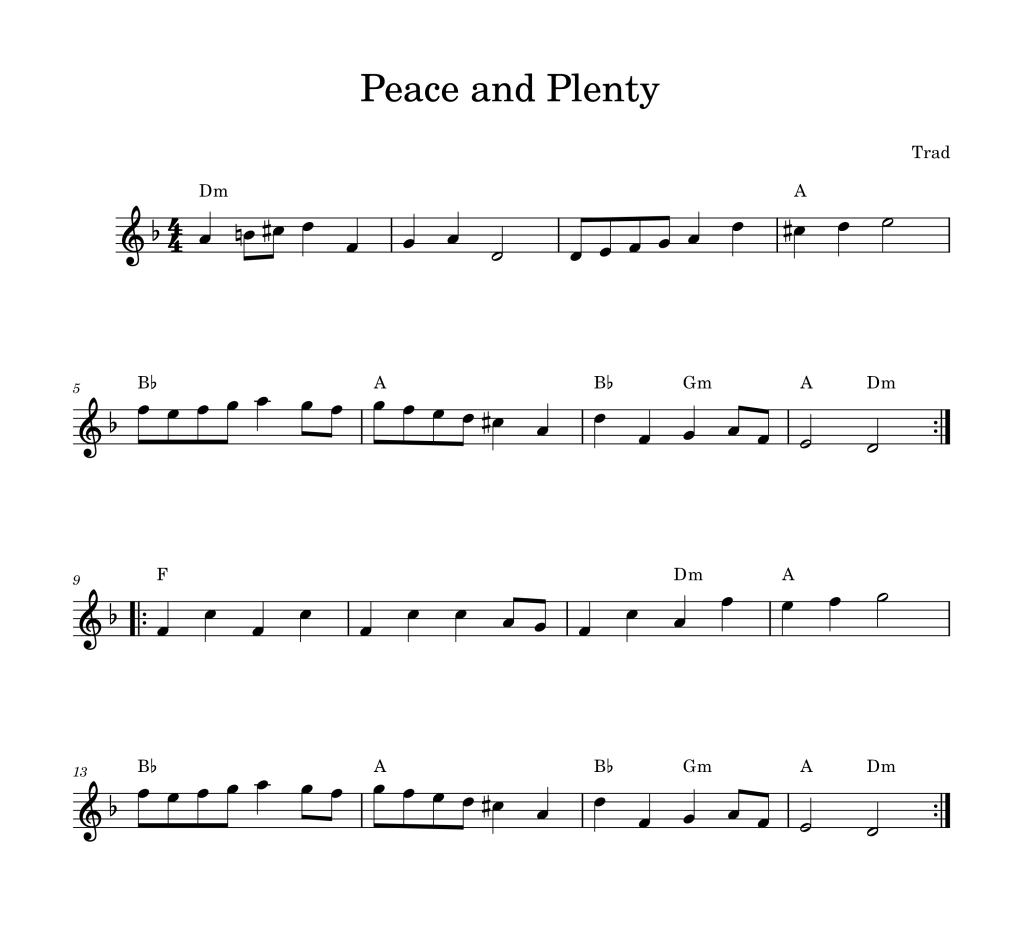
Peace and Plenty

Here is our new tune from 20th May, Peace and Plenty. It’s a tune from the 1718 edition of the Playford collection, I learned this from fantastic fiddle player Ben Potton, it is a little different than in that early manuscript, but only in the connecting/passing notes. It’s related to the Old Molly Oxford/Old Tom of Oxford Morris tune and we will potentially pair it with Old Meddon.

Here is the PDF:

Playing with the tunes

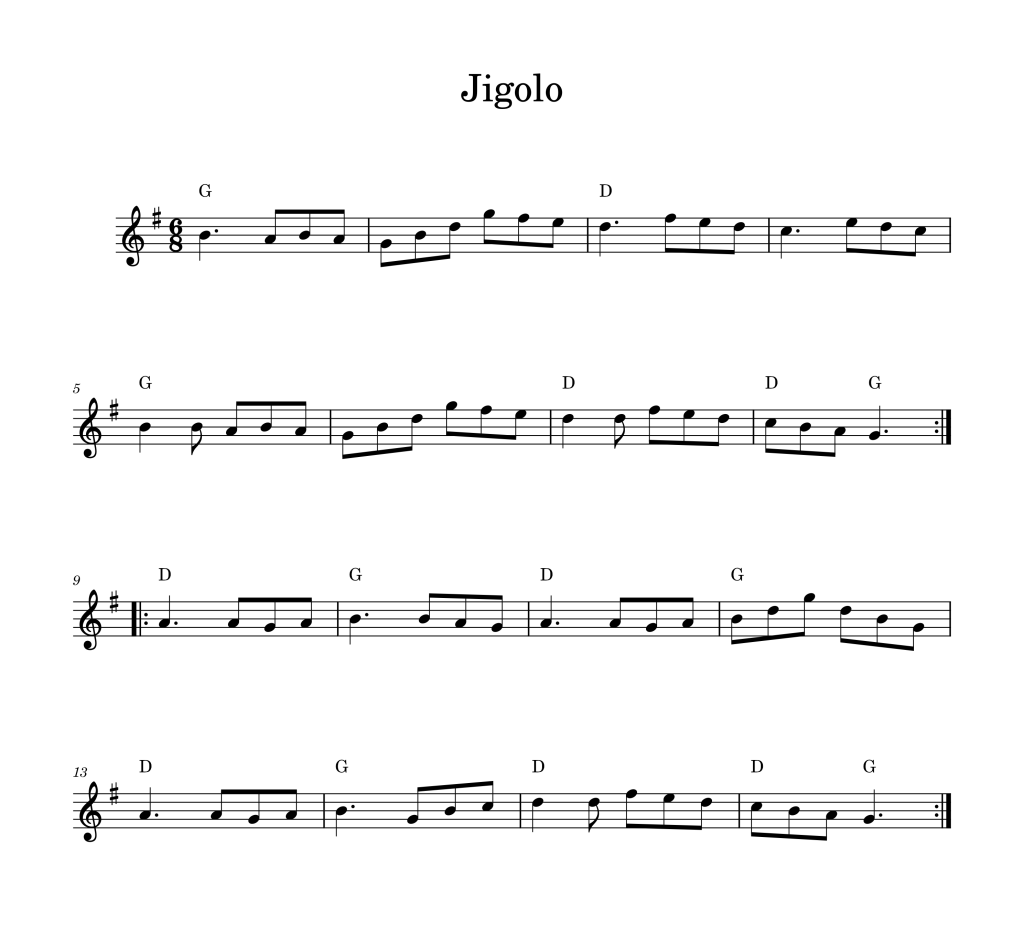
Monday saw us adding a riff to Old Meddon (dots and PDF are updated) and trying Jigolo in A major (A major version in PDF under dots). We looked at the patterns of scales, arpeggios and sequences in Jigolo and used this to go from G major to A major. Useful questions included: which degree of the scale does the tune start on (A part and B part)? In bar 7-8, which degree of the scale does the descending scale start on?

Some tunes have set keys that they are typically played but others can vary. I’ve played Jigolo in both G and A major at various sessions, for instance. It’s therefore a useful skill to be able to play tunes in different keys – it also helps to fully internalise each tune, to cement the tune in one’s memory, to make sure you know the tune inside out. Certain ornaments, variations and bowings will be easier on different notes in particular keys, and certain keys are more or less resonant on different instruments. Exploring a tune like this helps to get it in your memory long term – which of the tunes in your repertoire can you play in different keys?

Old Meddon of Fawsley

An English Morris tune for May Day, Old Meddon of Fawsley from the Longborough (Gloucestershire) tradition. I’ve not found any videos of this being danced, not sure why because it’s a fantastic tune! I think it’s related to Idbury Hill, given the similarities in the B part, but it definitely stands alone as a great tune. I found it in Chris Bartram’s English Fiddle book, which I would highly recommend.

Jigolo

Here are the videos and dots for Jigolo, a Welsh tune by Iolo Jones – we’ll be sticking with this one for a few weeks as well as returning to The Mallard and trying various things there too.

Try adding joining notes between A section repeats and B sections too, notes above or below the main notes work well, or a D of some description can also sound good.

The Mallard revisited

The Mallard is a tune from a long time ago! I wanted to revisit it and to potentially pair it with Enfield Wash, though I found it a bit notey and so wanted to simplify it a little.

Stage one: we took out as many notes as we could until we had the bare skeleton of the tune – but it still had to be recognisable as the tune.

Stage two: we add notes back in, either from the original tune or using similar figures.

Stage three: as we tried things out, I wrote down some of the ideas that came out. The two versions below represent some of the ideas that came out during that experimentation. They are not supposed to be definitive versions but rather examples of what can happen if you play around with a tune in this way.