It’s a Playford tune! We need it for the ECDC visit! I will update the info at a later date! Here it is:
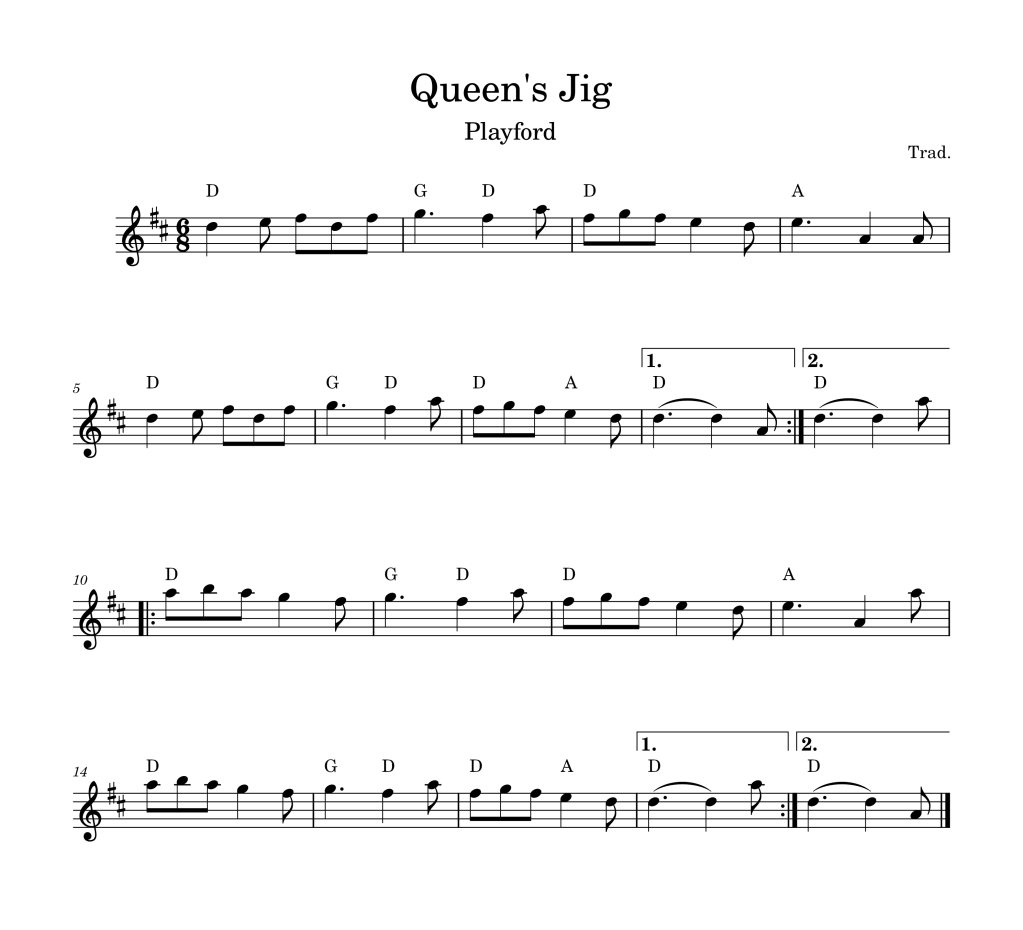
It’s a Playford tune! We need it for the ECDC visit! I will update the info at a later date! Here it is:
Queen’s Jig – Own dance
Johnny’s Gone to France – Circassian Circle
The Big Ship – Mr Isaac’s Magic
Lilting Banshee – Maguire’s Irish Coffee
Great North Run – New Elixir
Soldier’s Joy – Terry’s Triple Chain
Fete de Village – own dance TBC
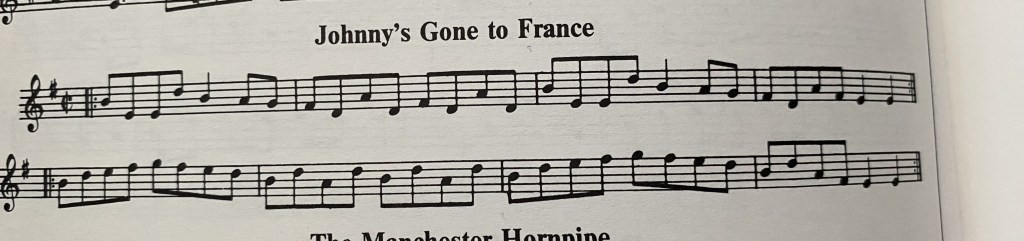
Here are the dots and video for Johnny’s Gone to France. There was some discussion over the origins of this tune on Monday as I, and many others, felt that that it sound pretty Irish! Further research shows that this tune is in The Fiddler’s Tune Book Vol. 2 by Peter Kennedy (1954), which covers tunes from all over the British Isles, it’s listed as on TuneArch.org as an English reel, and it’s also in Michael Raven’s English Country Dance Tunes book (1984). However! The version in the Raven book is slightly different to the version I know specifically at the end – I play both on the video – which makes it sound a lot less Irish. This makes me think that it is an English reel after all, of the type similar to tunes such as Wednesday Night, Dear Tobacco and Cuckold Come Out the Amery. I find the alternative titles/related tunes that have been suggested on various sites to be rather tenuous at best, so this is what we’re going with!

For those of you that are interested, here is the Michael Raven’s version:
Here is the arrangement of Fete de Village that we put together on 30th September.

Here are the videos I took during the sessions (edited into one video), with all three parts:
Here are some of the other videos that people have found:
Fete de Village is a country dance tune that’s been in the English tradition for well over 200 years, but it started life as music from a stage production of the same name by French composer Gossec. This production came to England in the 1780s, after which time this tune can be found in various English tune collections such as those of William Mittel and Thomas Hammersley as well as in the infamous 1785 ‘A Selection of Scotch, English, Irish and Foreign Airs’ by Aird (vol. II). Source: Trad Tune Archive
I’ve included a version of the tune by Bellowhead below, partially because it’s brilliant but also because it’s too late in the evening for me to record a video, I will remedy this tomorrow! *EDIT – there is now a video of the tune played at a medium speed below the Bellowhead video*
Here are the dots and downloads:
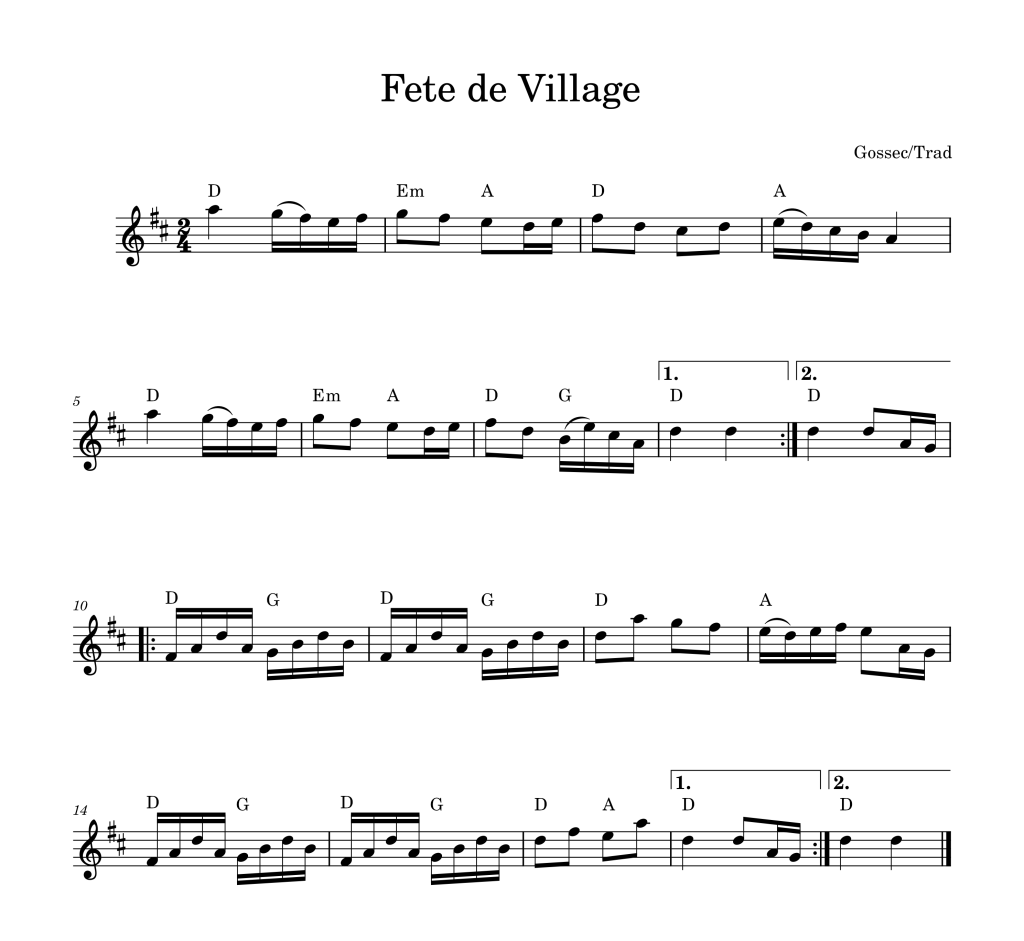
We played with the arpeggio patterns in the B section, building these up gradually and trying different inversions to create an automatic harmony. Brush up on your D and G major arpeggios, there will be more on this next week!
Lark In The Clear Air
Hardiman’s Fancy (in D major)
Peace and Plenty/Old Meddon
Will’s Way
Sir John Fenwick’s the Flower Amang Them
Les Poulee Huppes
Spootiskerry/Willafjord
Polca Cefn Coed
Mari’s Wedding
These tunes have been rattling around for a while, with about half the class attendees knowing them and the other half not. Time to even the playing field!
Spootikerry is a tune by Ian Burns from Shetland, Willafjord is also a Shetland tune and the two are often played together in a set.


NB. Hardiman’s now has updated chords.
When playing Tobin’s Jig last week, we initially struggled to give the tune a sense of lift, lilt or dance – our solutions were:
A tune to potentially go with Hardiman’s Fancy, Irish jig Tobin’s Fancy. This has similar double-jig rhythms to Hardiman’s, with a similarly wide range of notes. At the time of choosing, I didn’t know what key Hardiman’s had been learned in, so D major was a good option for the various keys that this tune tends to be played in – we’ll find out later if that works!
24/6/24 edit: I have updated the tune with some slurs across the bar lines, to give the tune a sense of flow and lilt – these are purely examples of where these can go and should not be considered definitive or concrete! Three or four slurs per 8-bar section is plenty.

Here’s Irish tune Hardiman’s Fancy from guest tutor Tom Newell. Now with added chords!
 New Ealing Sessions