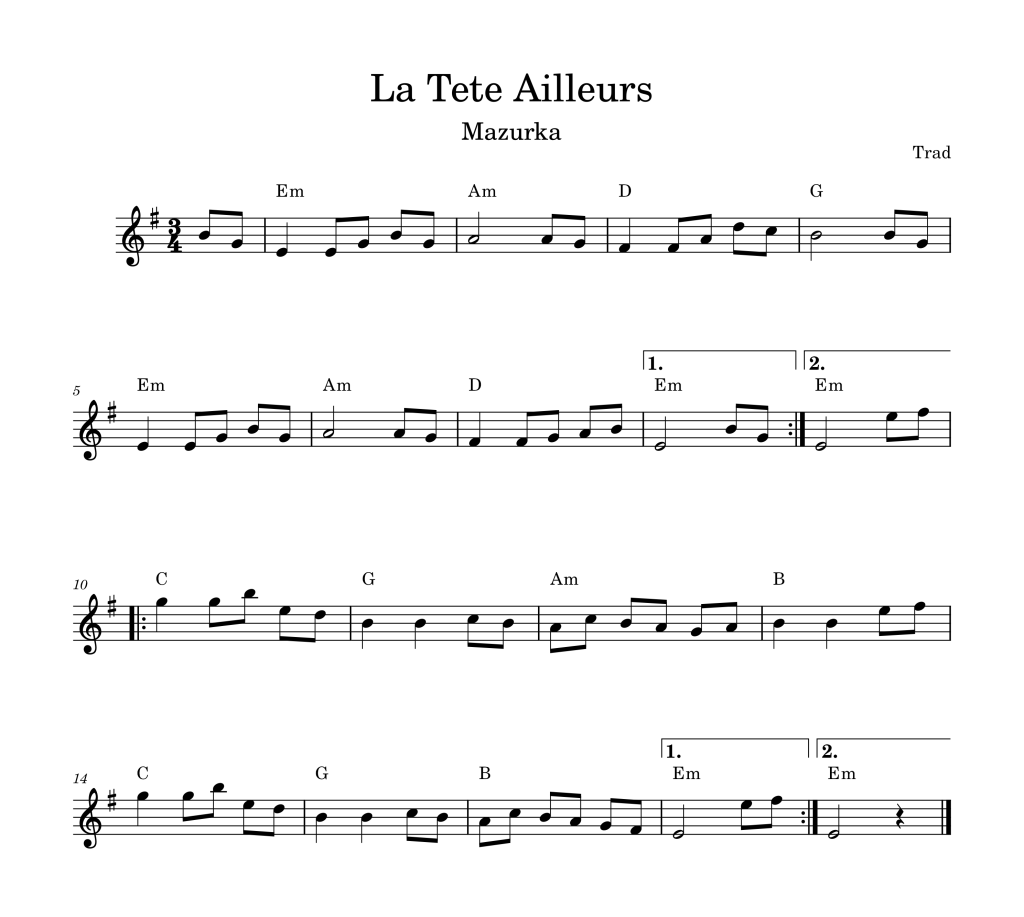
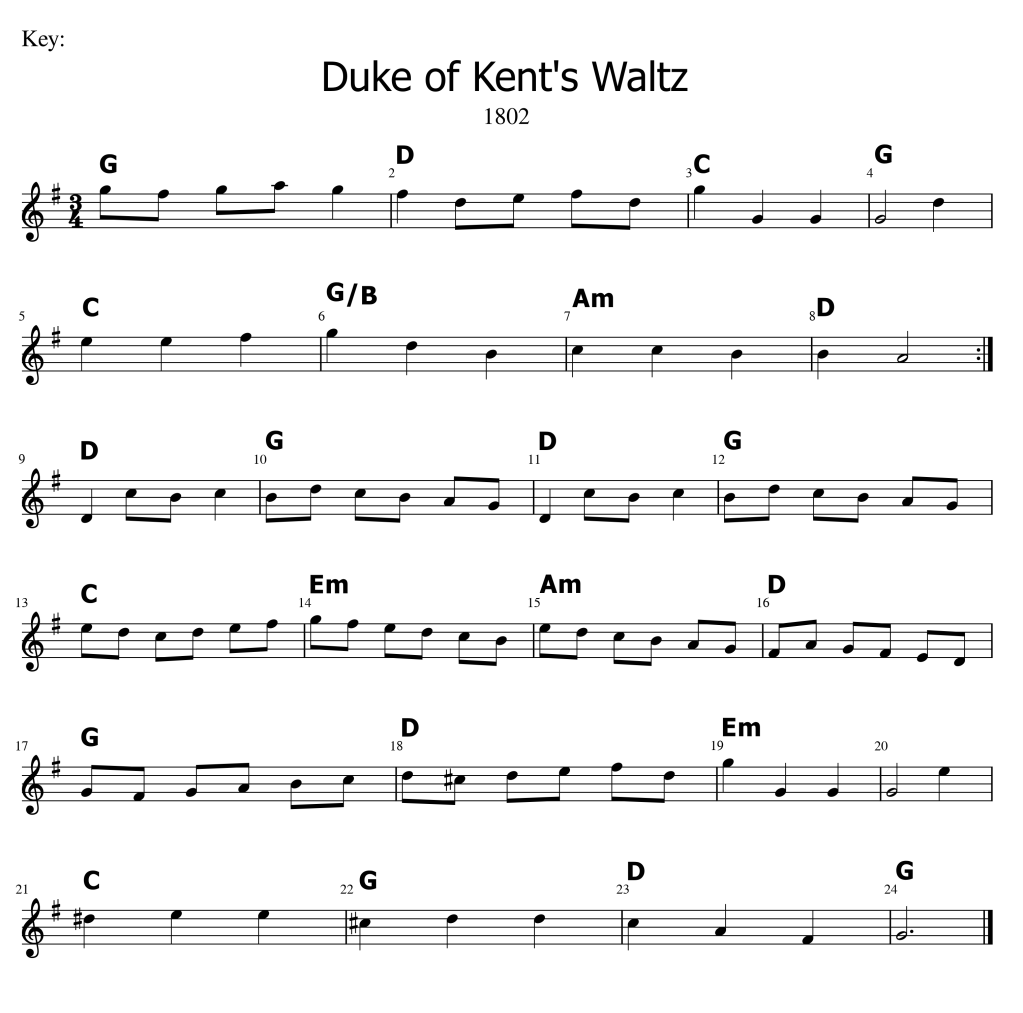
In order to create an accompanying pattern for our recent tunes in 3, we took inspiration from the melodic pattern in bar one of La Tete Ailleurs. This is essentially an E minor triad (three note chord) so we played it and then transposed the pattern for each chord in the piece, starting on an A for the A minor chord, a D for the D major chord etc.
We then took things up a notch, changing the inversions of the triads to keep the patterns a similar register. What’s an inversion? It’s the order in which you play the notes, for instance an A minor triad is ACE in root position, CEA in first inversion and EAC in second inversion. Below is a version that uses root and second inversion chords to create a part that flows.
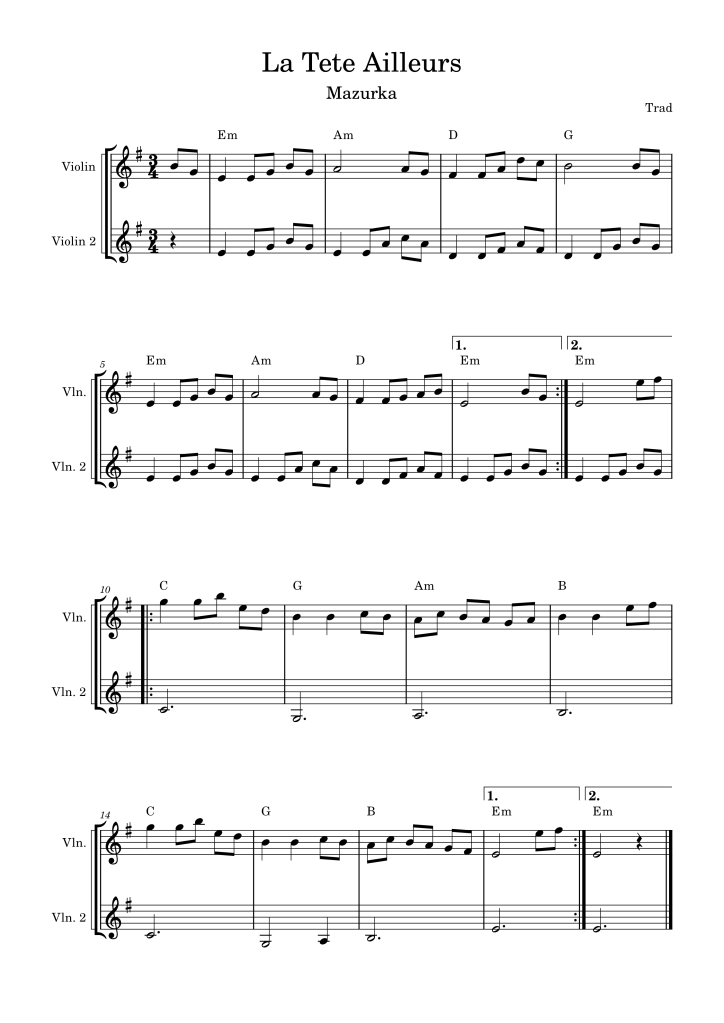
We switched to long notes in the B section to vary the texture, choosing the root note of each chord.





 New Ealing Sessions