A fantastic tune by fiddler Will Ward.

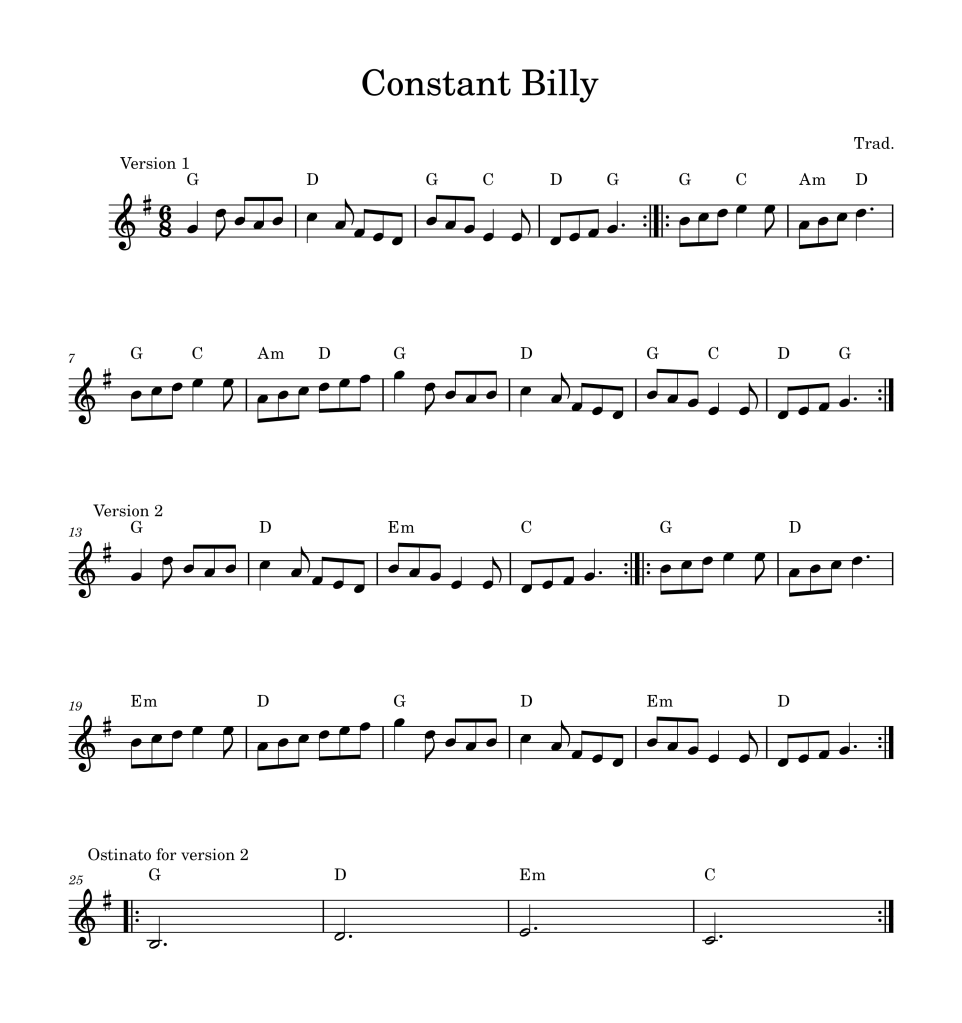
This week’s tune is English Morris dance tune Constant Billy. There are versions in most of the different Cotswold Morris tradition in various keys, though often transposed into G major to suit the commonly used melodeon. We made two different versions of the chords, the first being a conservative version that harmonises every half bar and the second a more contemporary version that harmonises every full bar. To refer back to our inspiration arrangement, Coronation Day, we have used/tried:
We will look at long and short ostinati next week and use these to make an intro/outro for the whole piece, also extending the tune by developing certain phrases.
Here is the video, with the second version of the chords:
Here are the dots:
Here are the dots and video for these week’s new tune, Coronation Day. This tune is in the 1698 edition of Playford’s Dancing Master collection (the first edition dating back to 1651) but not in the previous 1695 edition – this suggests that the coronation in question may have been of William and Mary, there having been a recent revolt against their predecessor James II and VII.

Here are the three versions of the chords that we tried, with a reminder that in experimenting, we’re not looking for one definitive set of chords but rather for different versions that contrast and give our arrangement light and shade, variety, a sense of direction etc.
Here is the tune from March 6th, The Valiant by East Anglian musician Simon Ritchie. We experimented with adding linking notes between sections – an A between the last C section and the first A section, an F# or a D between the C sections, and a BC run between the Bs. I’ve included some of these on the music, but have an experiment and see what else you can find.

Here is the PDF:
Kafoozalum with riff, harmony, push and alternative chords:
Arrangement PDF:
Here is the tune from Monday 5th December, from guest tutor and musician extraordinaire Ben Moss:
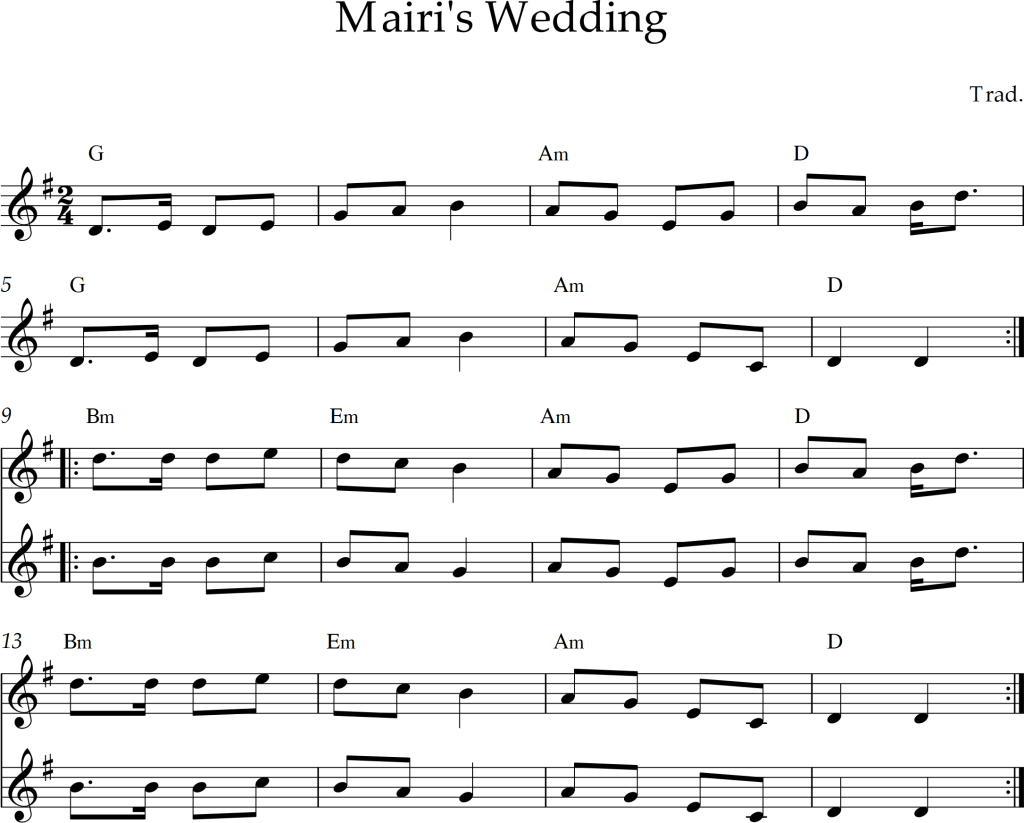
Here is the tune from Monday 31st, Mairi’s Wedding, aka The Lewis Bridal Song, or Jack Sweeney’s. This Scottish tune was first published in 1909, as is normally described as a Scottish/Scots Measure, this being a tune related to a reel but with more quavers if written in 2/4, or crotchets if written in 4/4. It is a popular tune for Scottish Country Dancing, with the well known words being added in around 1935. We will use this as the opening tune in a set with Peat Fire Flame.
Here are the dots and PDF:
Here is the second tune in our new set, Major Mackie, or Major Mackie’s Jig. This is tune from the late 1800’s, it turns up in English, Scottish, Canadian and American traditions. It was first published in the ever popular series Kerr’s Merry Melodies.
Here are the dots, followed by videos of the tune and rhythm parts.

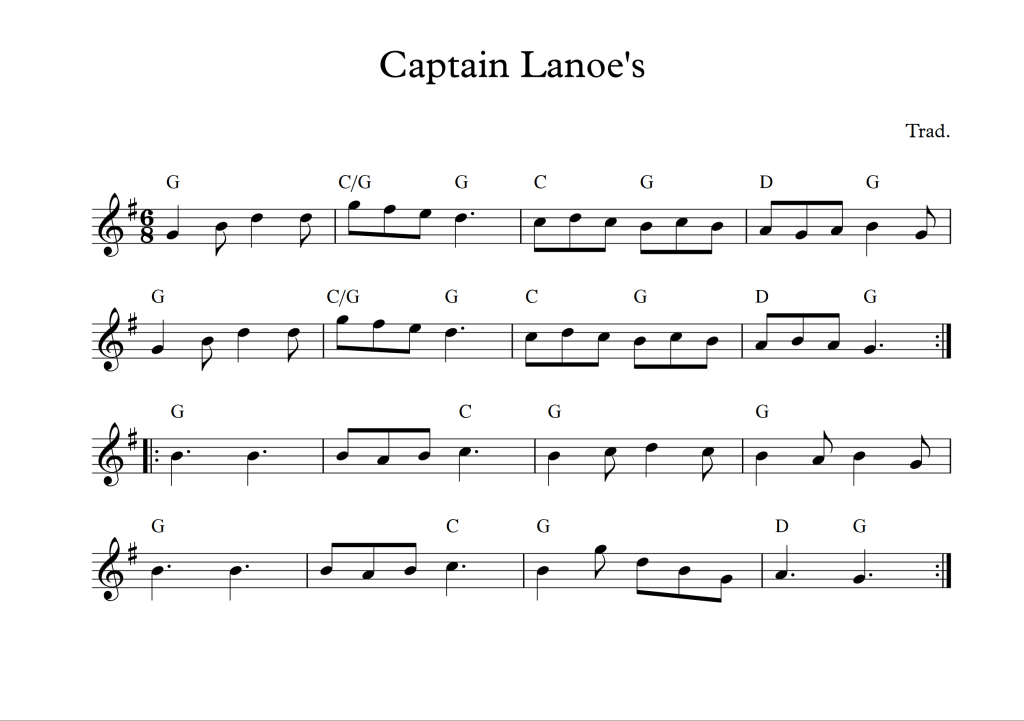
Here is our first official tune of the term, Captain Lanoe’s, aka Captain Lanoe’s Quickstep, Marionets (sic) or Marionets Cotillion. This is an English country dance tune from the late 1700s.
Here are the dots:
Here is a video of the tune, followed by one for the guitars/ukes/percussion:
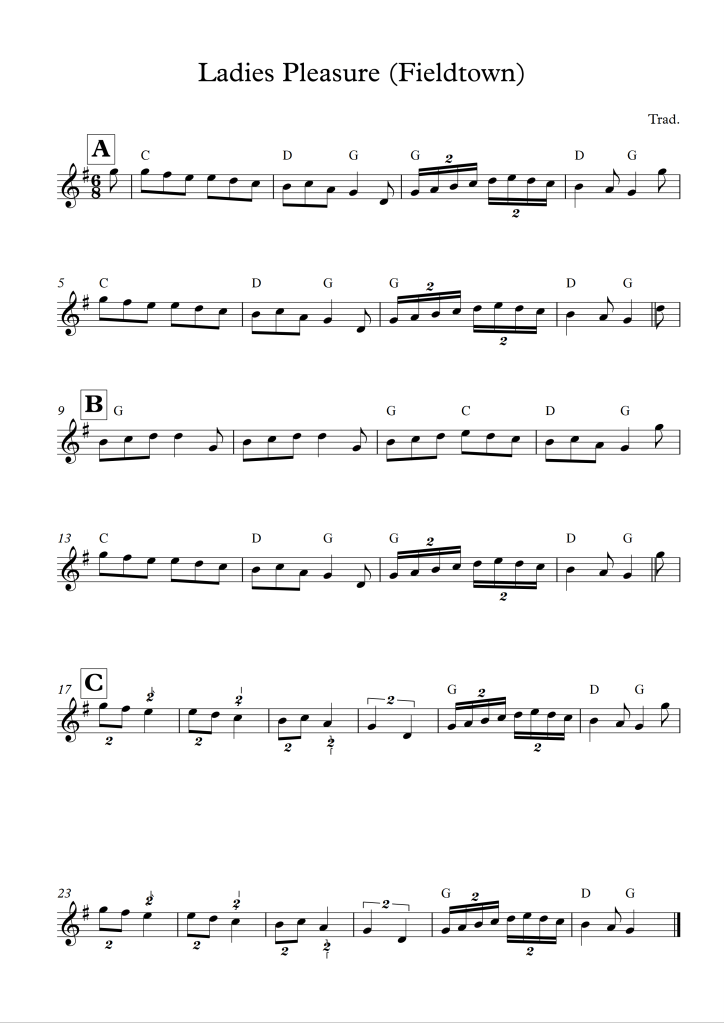
Here is the video and dots for Ladies Pleasure, a tune from the Fieldtown Morris tradition and one that changes meter from 6/8 to 2/4. The ‘2’ over the patterns in bar three (and elsewhere) indicate a duplet, so instead of each main beat dividing into three quavers as it would normally in 6/8, it divides into two quavers.
Here is the video:
Here are the dots – the structure would normally be ABCBCB.
 New Ealing Sessions