Deborah is a violinist and violist specialising in English folk music. She trained in viola and Baroque viola at Birmingham Conservatoire, before returning to her first love of traditional music, song and dance.
Deborah has developed a passion for playing for dancing since joining her first ceilidh band at age 13. She is a member of Stepling, a band performing English music, step-dance, song and percussion, and also plays with Folk Dance Remixed, a dance company combining traditional dance with hip hop and street dance styles, with whom she has performed as such events as Car Fest, the Southbank's Festival of Love and Glasgow's Commonwealth Games Festival.
Deborah records on a regular basis for a number of people, including The Mystery Fax Machine Orchestra, and for Laurel Swift's 'Travelling with Thomas' musical.
She teaches music, song and dance regularly for The English Folk Dance and Song Society, as well as on a freelance basis for various workshop series, festivals and music services. Deborah recently completed The Teaching Musician MA degree course at Trinity Laban, graduating with Distinction.
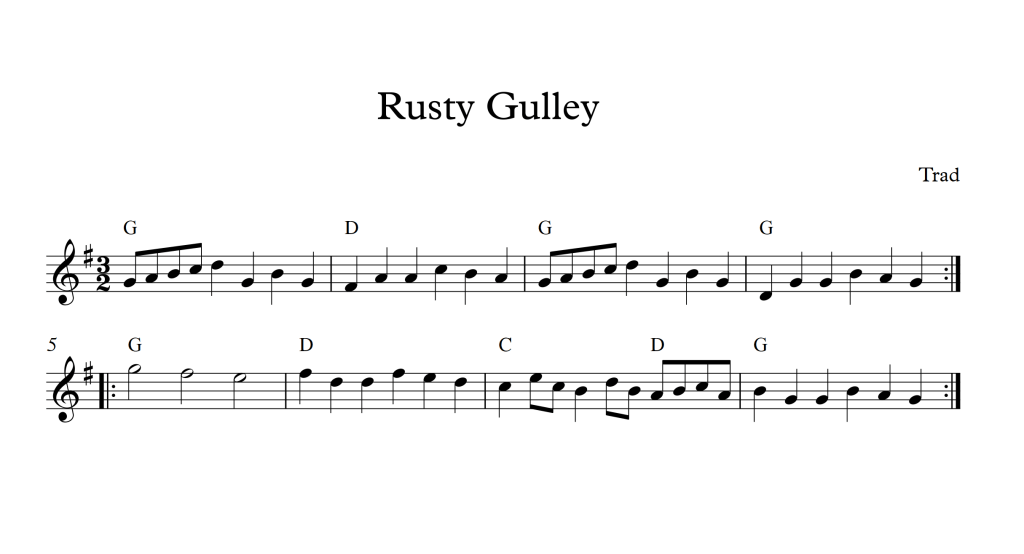
The third in our trilogy of 3/2 hornpipes – this three-part hornpipe, first published in 1742, has some similar musical figures to the previous 3/2 tunes covered recently and follows on rather nicely from the Rusty Gulley.
Here is a video with a slow and a faster play through, with another faster play through courtesy of Spiers and Boden:
Next week, we’ll apply some of our 3/2 variation ideas to this tune, and try all three tunes together in a set (Pawkie Adam Glen/Rusty Gulley/Old Lancashire Hornpipe).
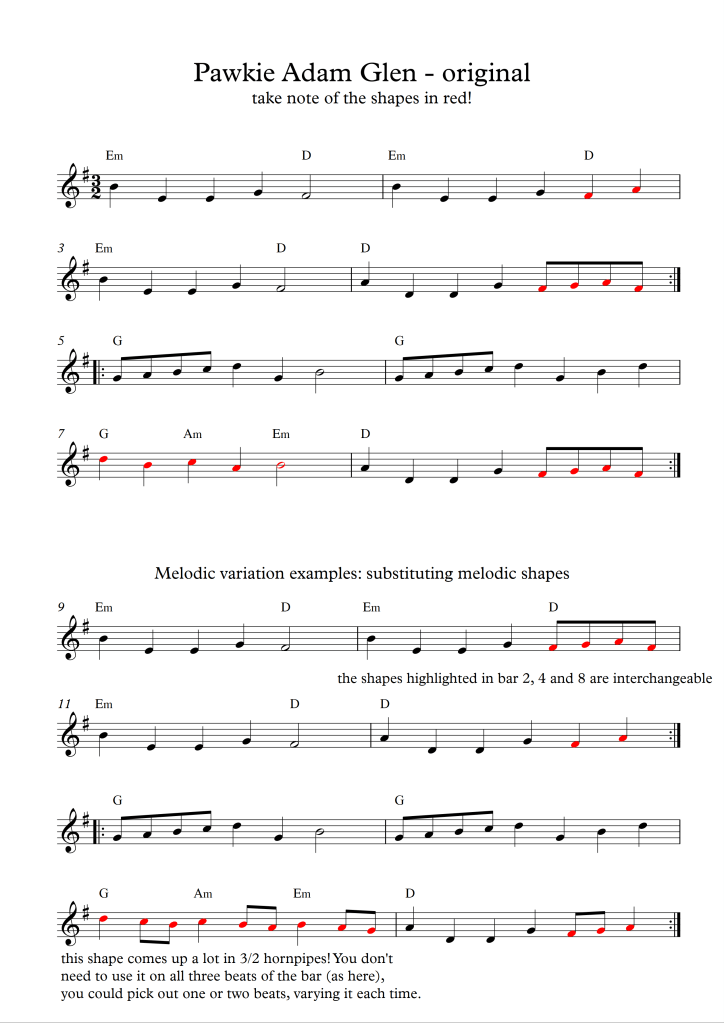
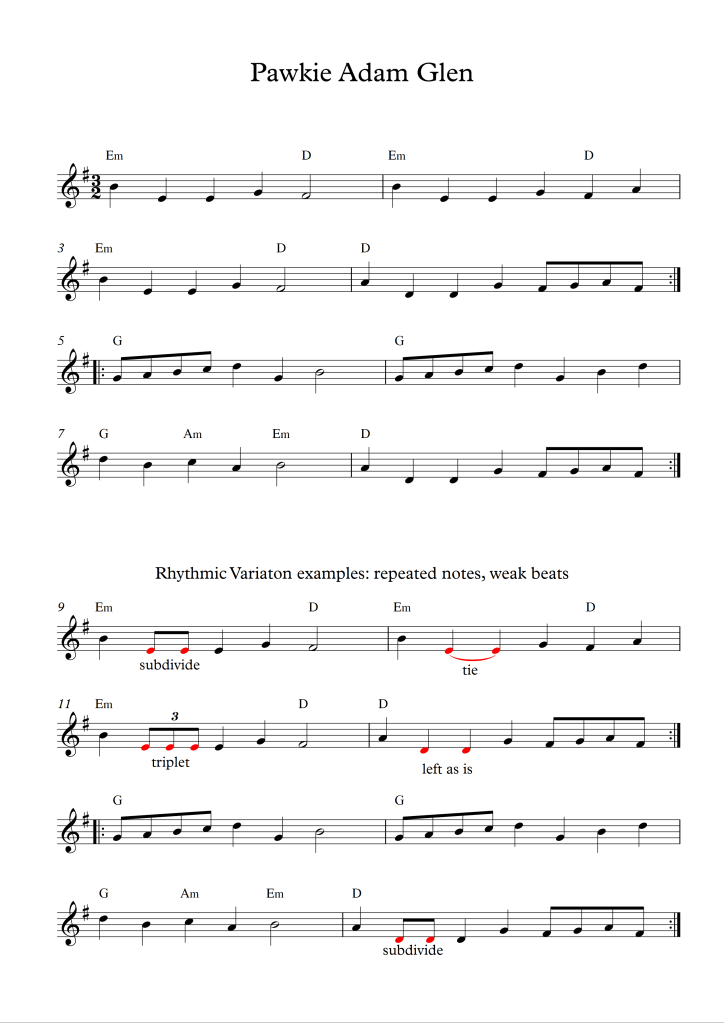
In addition to the rhythmic variations we covered last week, there are some nice melodic variations available in this tune. Our first idea was to substitute existing melodic shapes for others in the tune, for example in bars 2, 4 and 8. The second involved substituting a figure that often comes up in 3/2 hornpipes. Have an experiment, try these and the rhythmic variations and find what works for you!
Here’s another 3/2 hornpipe to go with Rusty Gulley, known as ‘Adam Glen’ or ‘Pawkie Adam Glen’ – the word pawkie means ‘artfully shrewd’ and is still in use in Scotland and northern parts of England, from the English ‘pawk’, meaning trick.
Try adding the turns and triplets that we’ve been using recently in places where the melody moves by step, and look out for places where there are repeated notes – we will try some things out with those next time!
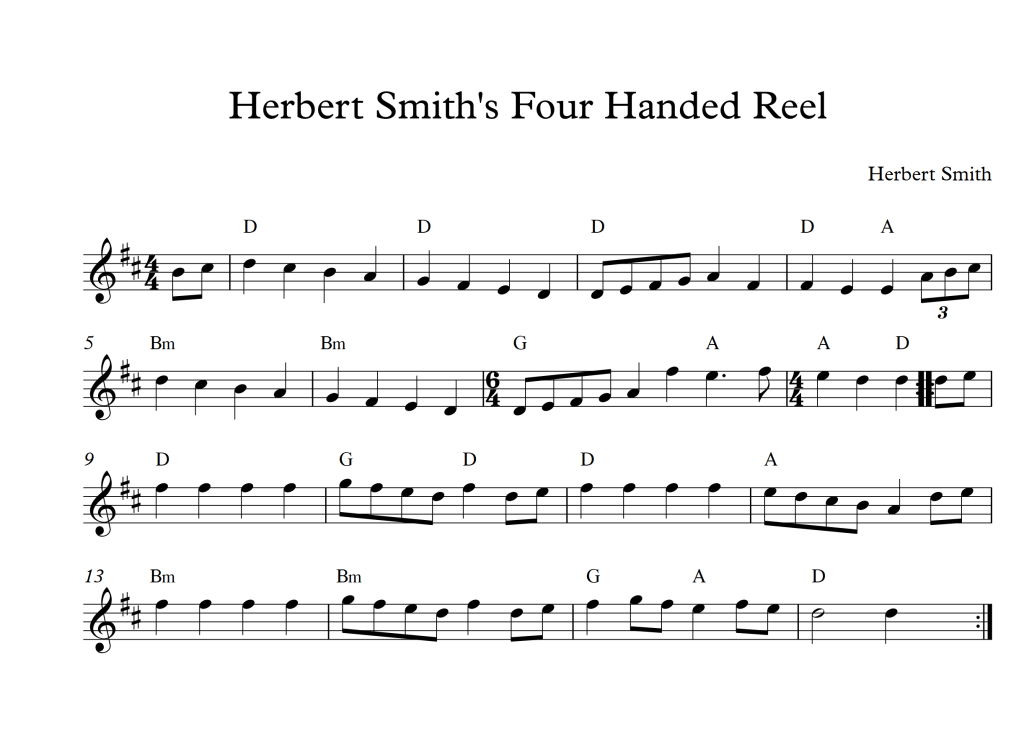
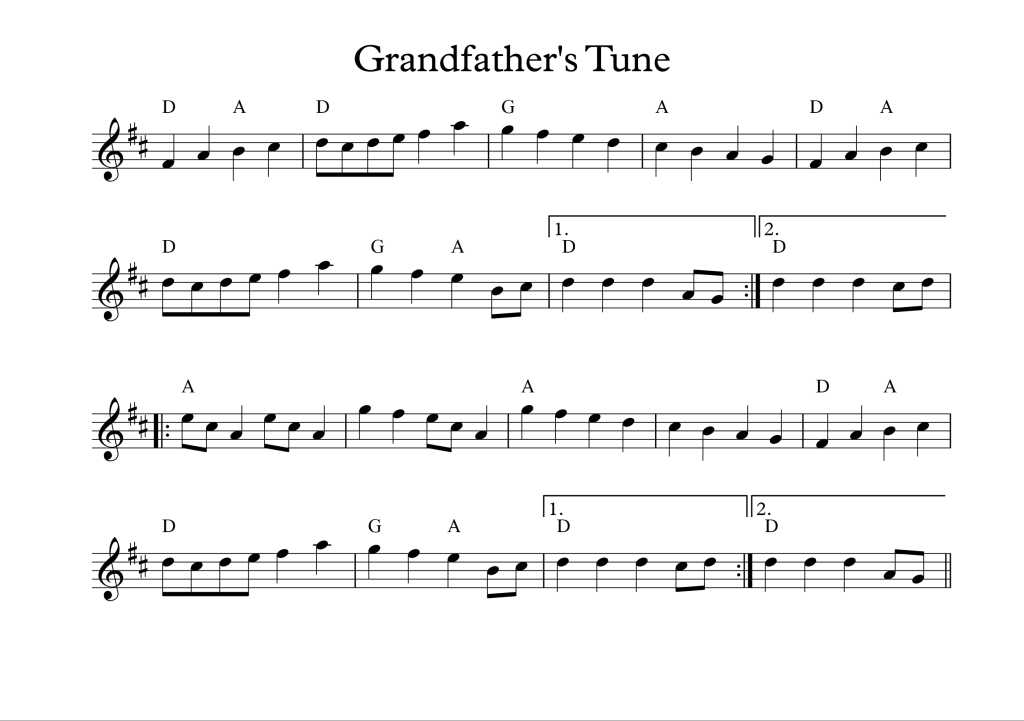
Here is the tune from January 18th’ class, Herbert Smith’s Four-Handed Reel. Despite the title it is a polka – the ‘four-handed reel’ refers to a dance figure and not to the nature of the tune! It goes rather nicely with Grandfather’s Tune and has a similar descending scale pattern that gives lots of opportunities for turns and triplets, as discussed last week. You can also vary the rhythm in the B part, sub-dividing or combining the notes in bars X , Y and Z.
This tune is a little unusual in that it has an extra two beats in the A music. It might be that this was added on purpose to help dancers get to where they need to be in the dance, or it might just be a quirk that caught on!
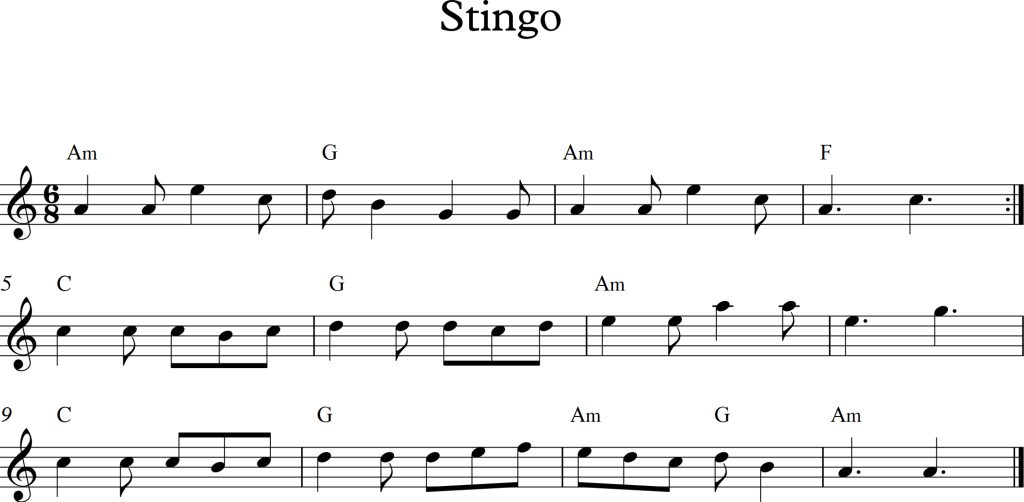
Our final tune of the term: Stingo can be found in the 1651 edition of Playford’s Dancing Master, with versions known as Cold and Raw, Oil of Barley and many other names. Here’s a video with demos on the viola this time, for the sake of variety and definitely not because that was the instrument I had out and I’m too lazy to switch.
Here are the dots:
We played with the idea of adding ‘fidgets’ in as melodic/rhythmic variations – where you have two notes the same, try adding a note in between, either going up or down a step. Here is a PDF with some examples in red, and underneath it the PDF of the original:
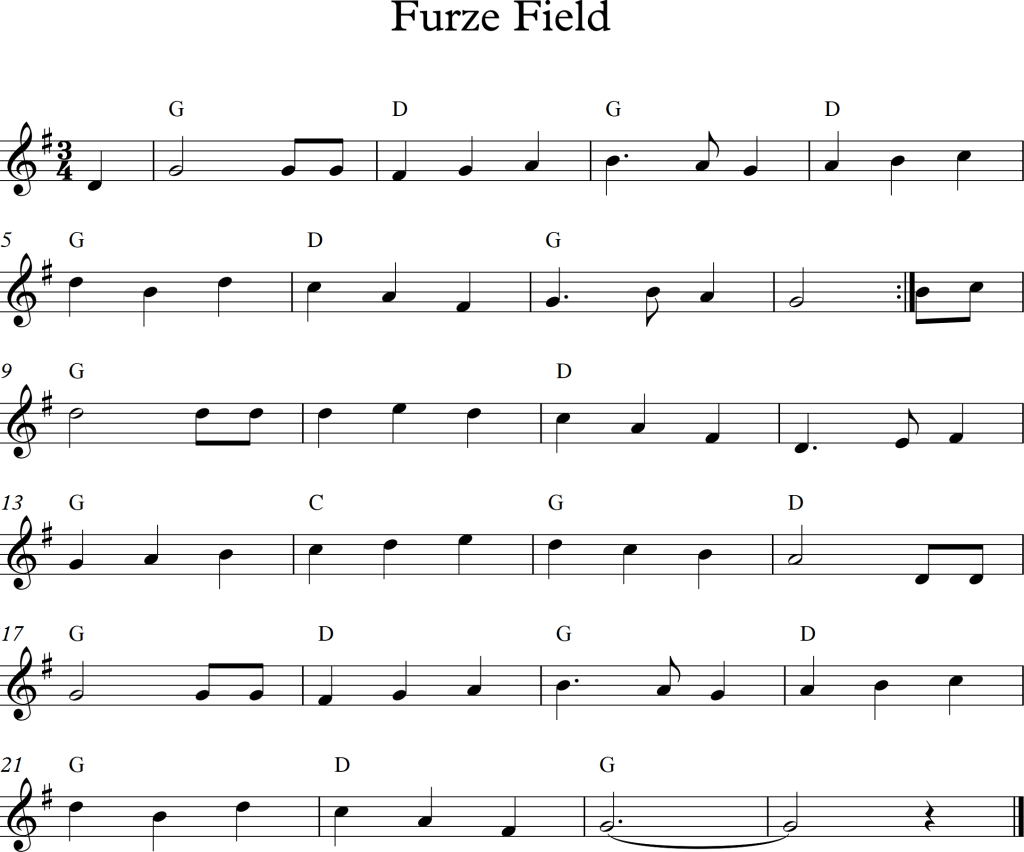
A gorgeous tune to go with Cumberland Waltz. Furze is another word for gorse, and this tune/song was collected in Hampshire in 1907 from Moses Mills. I’ve included a recording of the Watersons singing it at the bottom of the page, there the tune to the song is a little different from our tune. Here is a video with a slow and faster play through:
We experimented by adding some turns in passages where the melody moved down by step, and added rhythmic variation by subdividing the last note of some bars. These were either just subdivided (blue), or else the second of note of the pair was changed to a D (red) as this fitted the chords, as is very satisfying on the fiddle! The effect is that you create more rhythmic movement and some forward momentum into the next bar. Here is a link to an example – it’s not a definitive version, it’s just one set of options and the idea is to experiment and come up with various placements that you like:



 New Ealing Sessions
