This is Tralee Gaol, an Irish polka that I know from playing for ceilidhs. It goes by many names and seems to be pretty widespread in Ireland and also across various parts of the world!
This is Mount Hills, from the Playford collection.
Here’s the video of the tune played slowly:
And then the tune played at speed, in the higher and lower registers:
Here are the dots, with the chords from memory so apologies if they aren’t what we had on the day, I will change them if necessary! The PDF is available here.
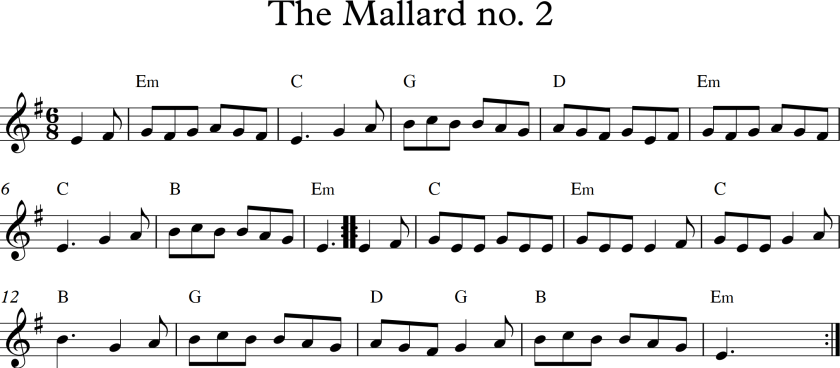
Here is the tune ‘The Mallard no 2’. It’s in Dave Townsend’s English Dance Tunes book but I can’t find it anywhere else – there are other tunes and songs that share the title but none with the same melody.
The PDF can be found here. Fiddle players might want to try double stopping with the open G string in the first two bars, then the D string in the next bar before going back to the G string for bars five and six. In the second section, you can double stop with the open G string for the first three bars.
Here’s a fab tune from the Playford collection. Mary D has done some research and says: “Jack o’ Lent was a tradition in England in the 15th, 16th and 17th centuries involving the abuse and burning of a straw effigy during the season of Lent, ending with its burning on Palm Sunday. The effigy, made of straw or stuffed clothes, was abused and stoned on Ash Wednesday while being dragged about the parish.”
Here are the arrangements for the May 27th concert at Gunnersbury Park. We’re playing 2:00 – 4:00 (with an interval), and I’m hoping we can get in before that to have a rehearse and to settle into the space. We will do a concert spot of our arrangements and a ceilidh spot playing for some dances that I’ll call (I’ll put list up later in the week, though it’ll all be things we did at the Ealing Folk Dance Club). We may also be joined by a local Morris team, though I need to finalise the details with my contact as Gunnersbury and with the team themselves.
There are full details on the Gunnersbury House page here, including the address and transport links, and details on how to reserve tickets: http://www.visitgunnersbury.org/west-london-folk-band-summer-concert-2/. Spread the word – tickets are free but you can book, just in case we get inundated!
Here are the videos for Monday’s Morris Medley, The Lollipop Man first:
… and Shepherd’s Hey here:
And the dots for each are below, with a PDF file here. We did a basic harmony for the beginning of Shepherd’s Hey, but other than that concentrated on emphasising the rhythm in particular bars (Bars 2, 4, 6 and 8 in Lollipop Man and bars 5 and 6 in Shepherd’s Hey).
As promised/threatened, here is a link to the recording of Lollipop Man from The Mother of All Morris album (not from the Morris On series as I misremembered), it’s NSFW:
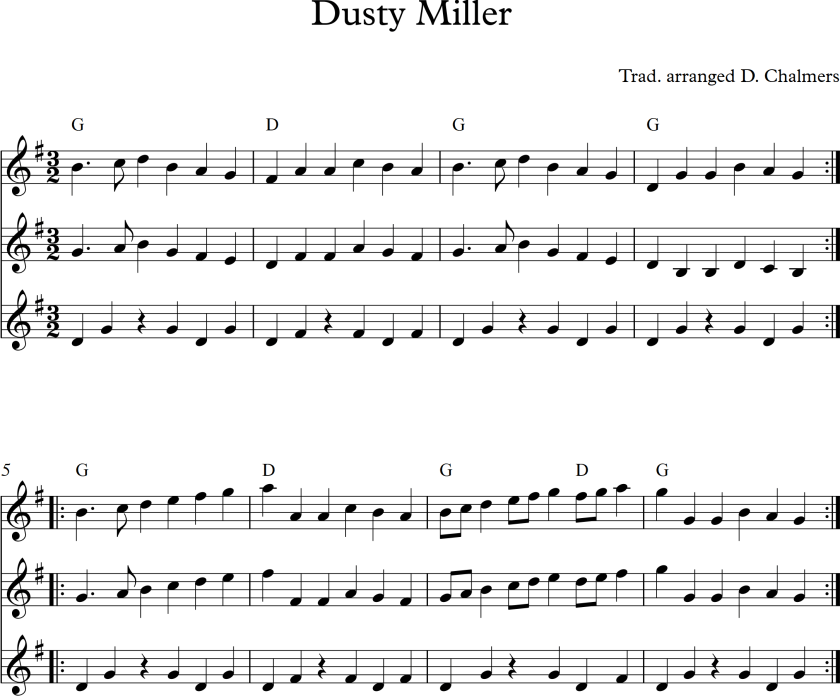
Here is the Dusty Miller, a fantastic 3/2 hornpipe first published in England in 1718 – it seems to have been very popular in the 1700s and early 1800s in England and Scotland in particular, and it also made its way to Ireland and America.
Here’s the video of the tune:
Here are the videos for the close harmony (2nd line of each system of the music):
…and the independent harmony (3rd line of each system of the music):
Here’s the video from Dave’s session on April 8th, with apologies for the delay in posting. Here’s the tune:
…and here’s the chord part:
The dots for this tune can be found by clicking here. Massive thanks to the incredible Dave Delarre for this great session, and I’ll be back for the beginning of next term on April 29th.




 New Ealing Sessions