Enfield Wash from guest tutor Tom Newell, dots to follow (hopefully)!

A Playford tune for the upcoming ECDC gig – the tune is played AABBB. Here’s the video:

Hunt the Squirrel is a fantastic and widespread tune, with many different versions (I know three different versions of the B part!) and it dates back to at least the mid 1700s.
We will use this tune in our forthcoming appearance at Ealing Country Dance Club, pairing it with Dory Boat.
The alternative arrangement for Hunt the Squirrel was drone G/D for whole A part and drone G/E for 1st half of B then return to G/D, some melody players play an octave lower. The alternative arrangement for Dory Boat was using a simplified B part (removing notes) and some melody players playing the root notes of the chords. Please make your own notes/references for this!

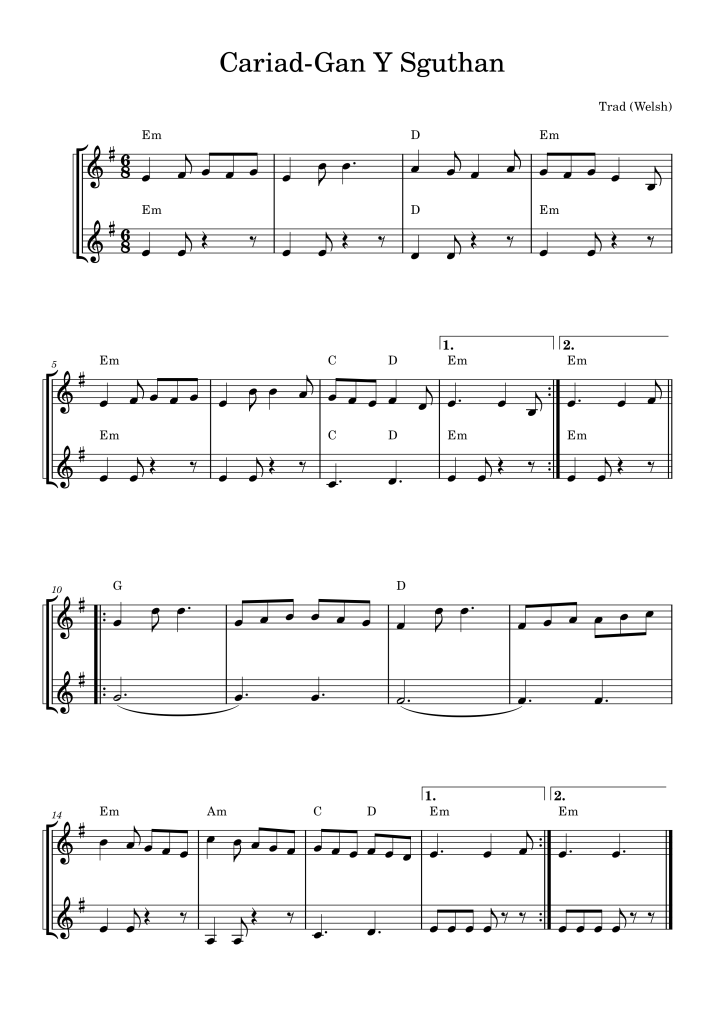
Here’s another Welsh tune to go with Cariad-Gan Y Sguthan, Y Crythor Llon or The Merry Fiddler. We’ll look into some alternative chords another week!
Here are the video, dots and PDF:

Here is The RSB jig by melodeon player extraordinaire Andy Cutting. Here are videos of a slow/faster version by me and then a gorgeous recording by Blowzabella (note how the chord sequence doesn’t resolve at the end of the B section!).
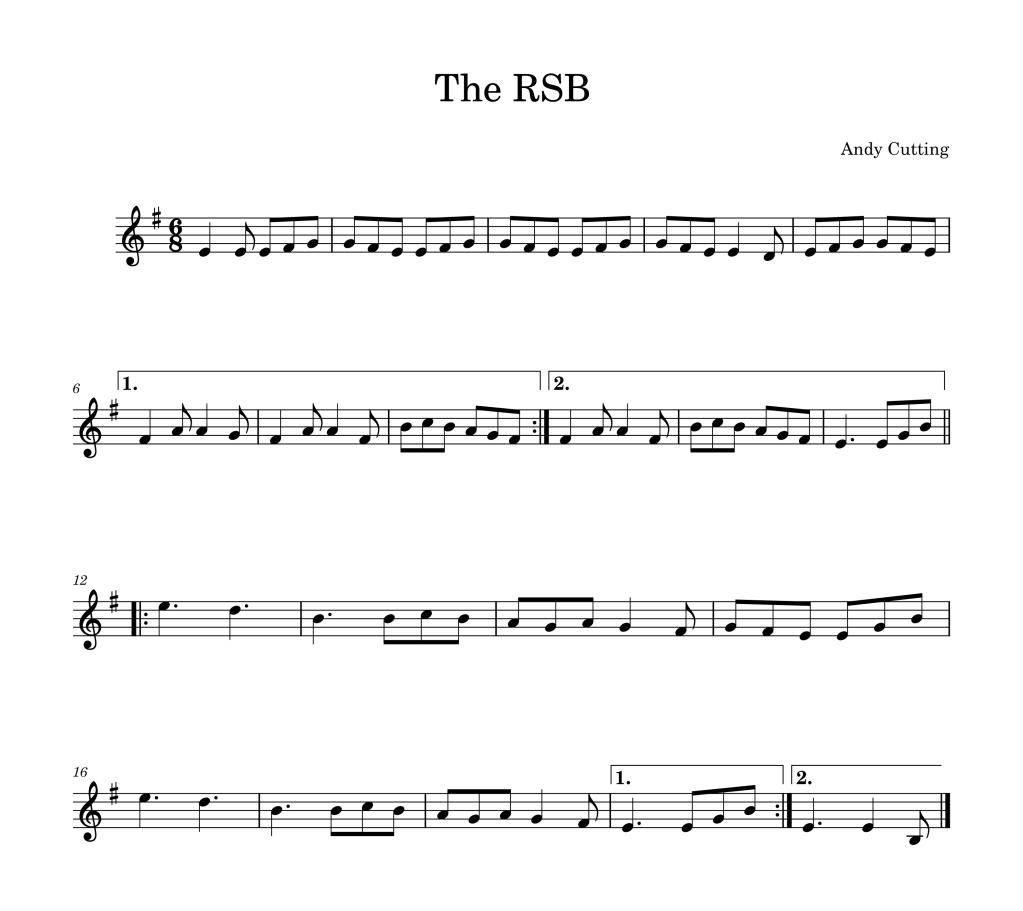
Here are the chords and the PDF of the tune:
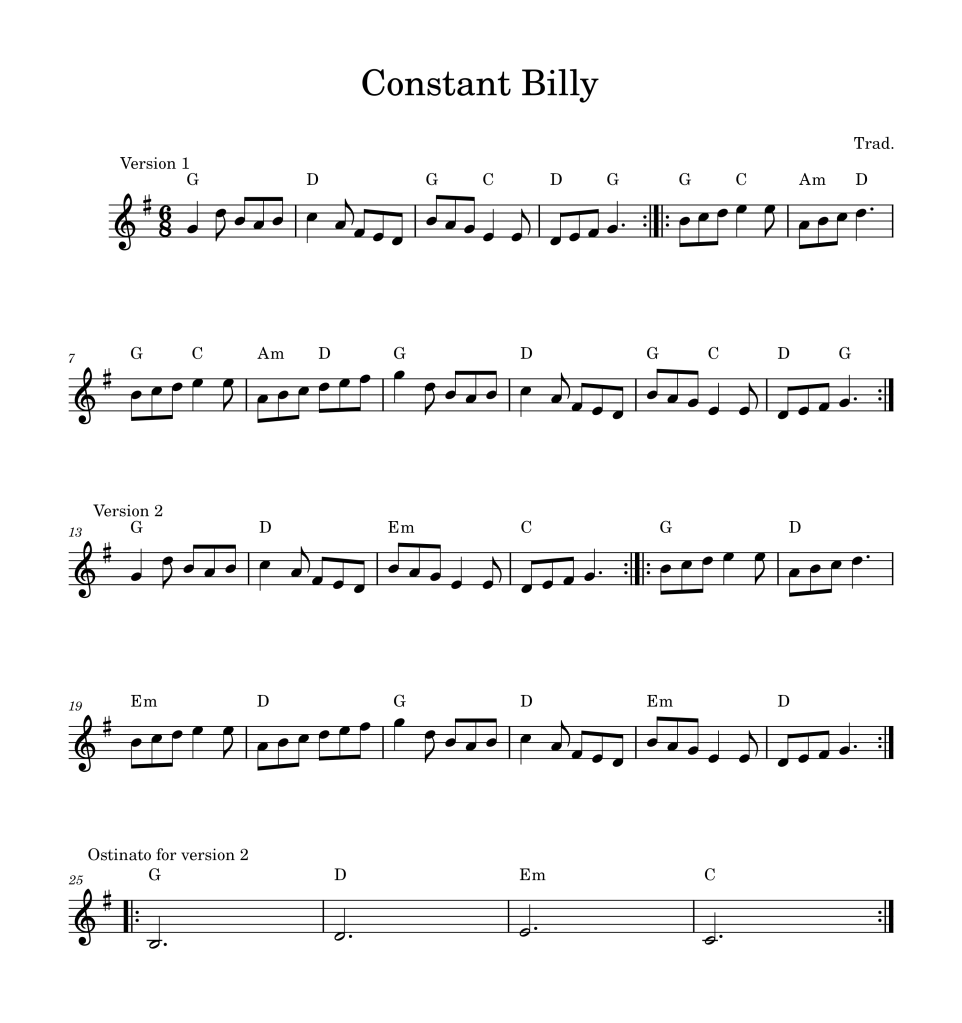
This week’s tune is English Morris dance tune Constant Billy. There are versions in most of the different Cotswold Morris tradition in various keys, though often transposed into G major to suit the commonly used melodeon. We made two different versions of the chords, the first being a conservative version that harmonises every half bar and the second a more contemporary version that harmonises every full bar. To refer back to our inspiration arrangement, Coronation Day, we have used/tried:
We will look at long and short ostinati next week and use these to make an intro/outro for the whole piece, also extending the tune by developing certain phrases.
Here is the video, with the second version of the chords:
Here are the dots:
Here is the tune from March 6th, The Valiant by East Anglian musician Simon Ritchie. We experimented with adding linking notes between sections – an A between the last C section and the first A section, an F# or a D between the C sections, and a BC run between the Bs. I’ve included some of these on the music, but have an experiment and see what else you can find.

Here is the PDF:
Here is the second tune in our new set, Major Mackie, or Major Mackie’s Jig. This is tune from the late 1800’s, it turns up in English, Scottish, Canadian and American traditions. It was first published in the ever popular series Kerr’s Merry Melodies.
Here are the dots, followed by videos of the tune and rhythm parts.

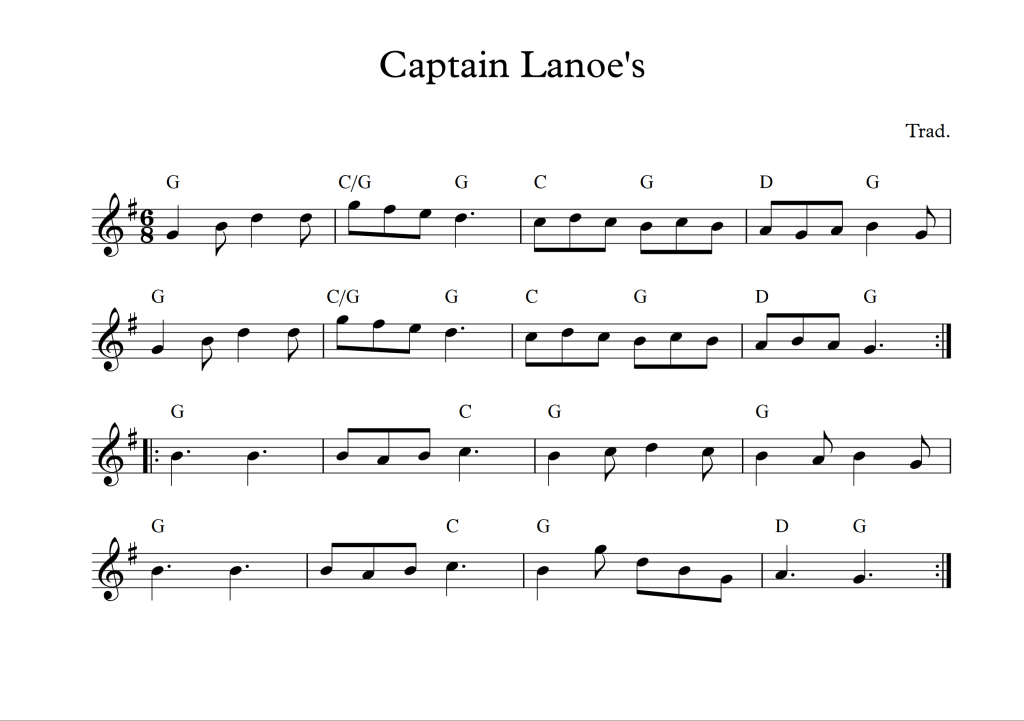
Here is our first official tune of the term, Captain Lanoe’s, aka Captain Lanoe’s Quickstep, Marionets (sic) or Marionets Cotillion. This is an English country dance tune from the late 1700s.
Here are the dots:
Here is a video of the tune, followed by one for the guitars/ukes/percussion:
 New Ealing Sessions