This is Tralee Gaol, an Irish polka that I know from playing for ceilidhs. It goes by many names and seems to be pretty widespread in Ireland and also across various parts of the world!
This is Mount Hills, from the Playford collection.
Here’s the video of the tune played slowly:
And then the tune played at speed, in the higher and lower registers:
Here are the dots, with the chords from memory so apologies if they aren’t what we had on the day, I will change them if necessary! The PDF is available here.
Here’s a fab tune from the Playford collection. Mary D has done some research and says: “Jack o’ Lent was a tradition in England in the 15th, 16th and 17th centuries involving the abuse and burning of a straw effigy during the season of Lent, ending with its burning on Palm Sunday. The effigy, made of straw or stuffed clothes, was abused and stoned on Ash Wednesday while being dragged about the parish.”
Here are the videos for Monday’s Morris Medley, The Lollipop Man first:
… and Shepherd’s Hey here:
And the dots for each are below, with a PDF file here. We did a basic harmony for the beginning of Shepherd’s Hey, but other than that concentrated on emphasising the rhythm in particular bars (Bars 2, 4, 6 and 8 in Lollipop Man and bars 5 and 6 in Shepherd’s Hey).
As promised/threatened, here is a link to the recording of Lollipop Man from The Mother of All Morris album (not from the Morris On series as I misremembered), it’s NSFW:
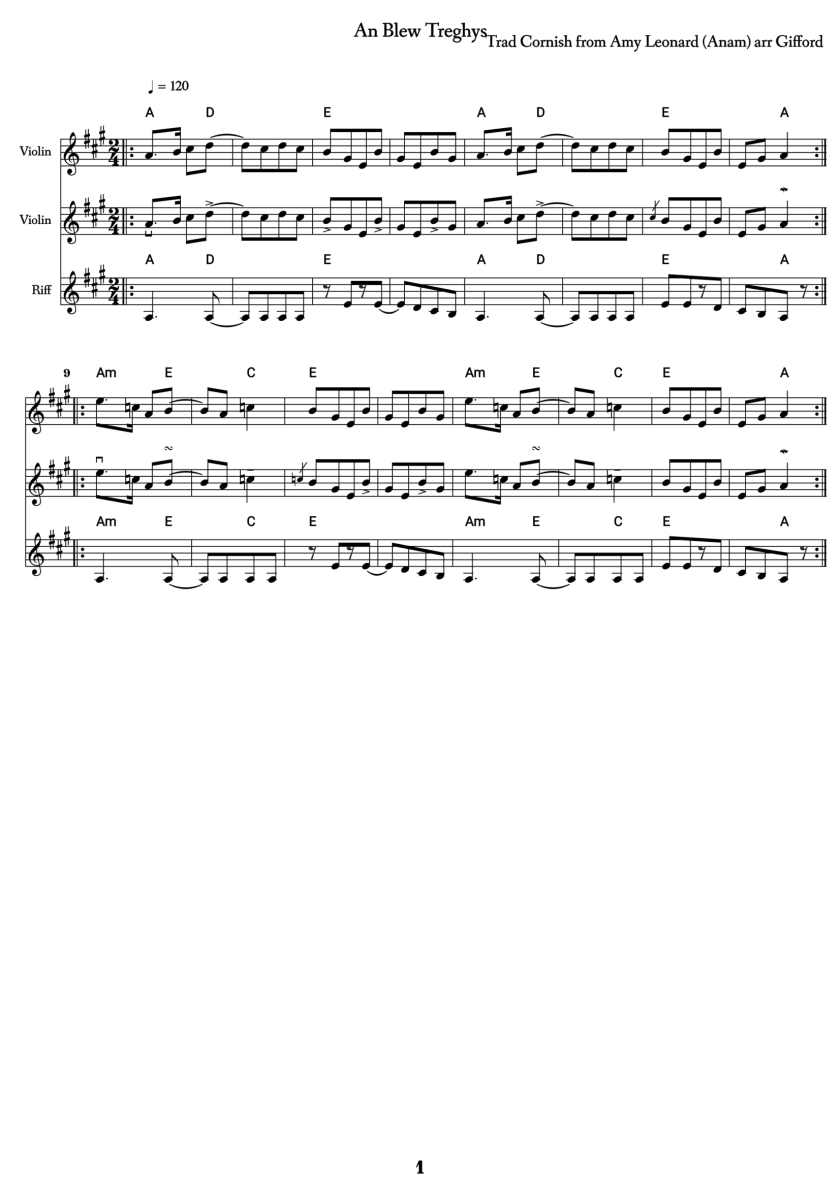
Here are the video and dots for An Blew Treghy, with huge thanks to Beth Gifford for covering the class. An Blew Treghys is a Cornish Tune which Beth learned from the singing of Aimee Leonard and recorded by Aimee’s band Anam on their album Riptide.
Here’s Small Coals and Little Money, a tune from the 1882 Northumbrian Minstrelsy manuscript. The A and B parts are almost identical so we created variation by varying the chord patterns and rhythms, taking out some notes in the melody, and trying out ornamentation.
In the chord part, we used a ‘chugging’ rhythm for the A part, and then a more relaxed rhythm in the B part.
Melody instruments created a groove for the A part by switching between A minor and G major notes (click here for the chart, the beats are minim beats, so 2 slow beats per bar).
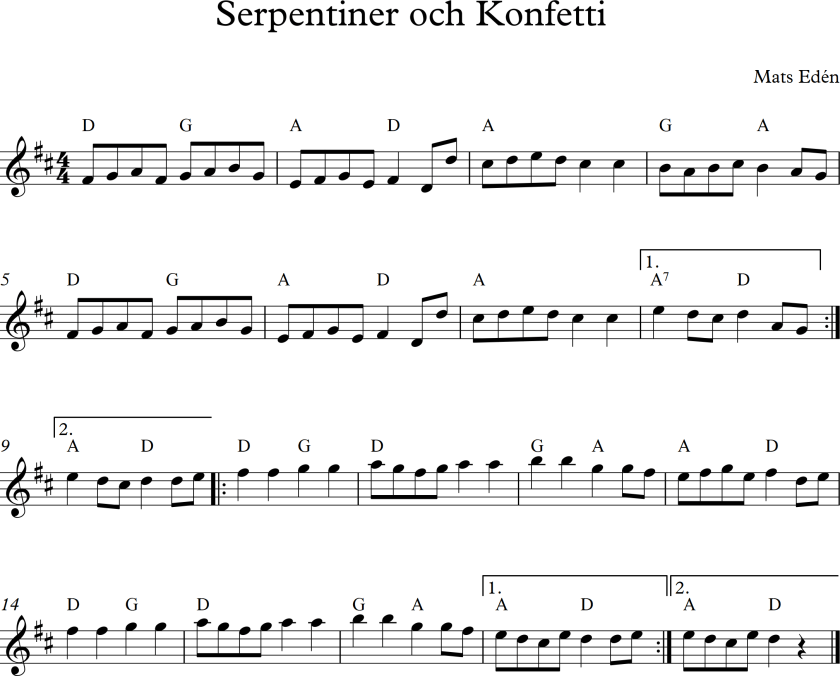
Serpentiner och Konfetti (Streamers and Confetti) is a fantastic reijländer tune by Swedish melodeon player Mats Edén. We’re not trying to play it in a particularly Swedish way, also I somehow only played the B section once on the video – apologies, it had been a long day!
Here are the dots for the tune:
We varied the rhythm by anticipating (or ‘pushing’) some of the main beats in the melody and also in the chord sequence – dots can be found here.
Here’s Kit White’s no. 2, a tune I know from various sessions. I’ve had trouble tracking down who Kit White was or is – it’s not a good phrase to Google, though if you need a teeth whitening kit then I can tell you that have lots of options available, see also the drummer from the White Stripes and white football uniforms – and the Vaughn Williams Library archives (one of my ‘go to’ sources) doesn’t have any records of either the tune or the person. I have however found him listed as performing melodeon on a recording of traditional music from Yorkshire made in 1950, so that’s a start! My version differs slightly from some of the notated versions I’ve found, as so often happens in traditional music. Here’s the video, with a slow version, a faster version with variations and the chord rhythm:
Here are the dots for the standard version of the tune:
The variations we tried involved switching the rhythms around in the A and B parts, and using the chord rhythm:





 New Ealing Sessions