Here are the harmonies for Sheriff’s Ride and Idbury Hill, both as PDFs:
I’m not currently able to do videos but will try to come back to this and do videos for these.
Here are the harmonies for Sheriff’s Ride and Idbury Hill, both as PDFs:
I’m not currently able to do videos but will try to come back to this and do videos for these.
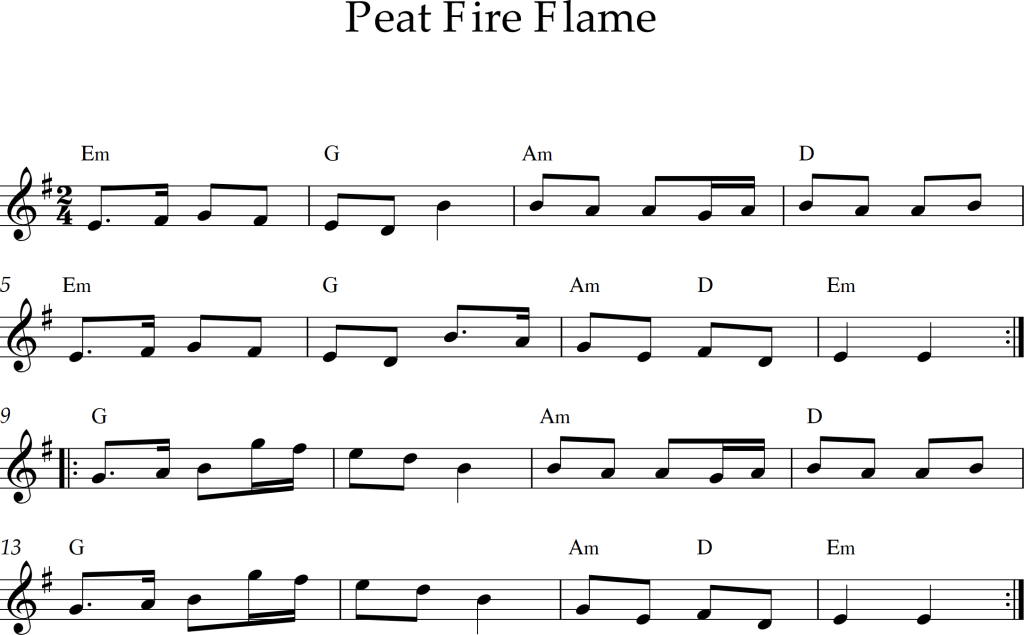
Here is the tune from Monday 17th, Peat Fire Flame, aka The Fireside Reel. This Scottish tune was first published in 1734 and remains a popular tune especially for Scottish Country Dancing. Words were added on 1921 by Kenneth McCleod and this version was popularised by The Corries on their 1977 album Peat Fire Flame.

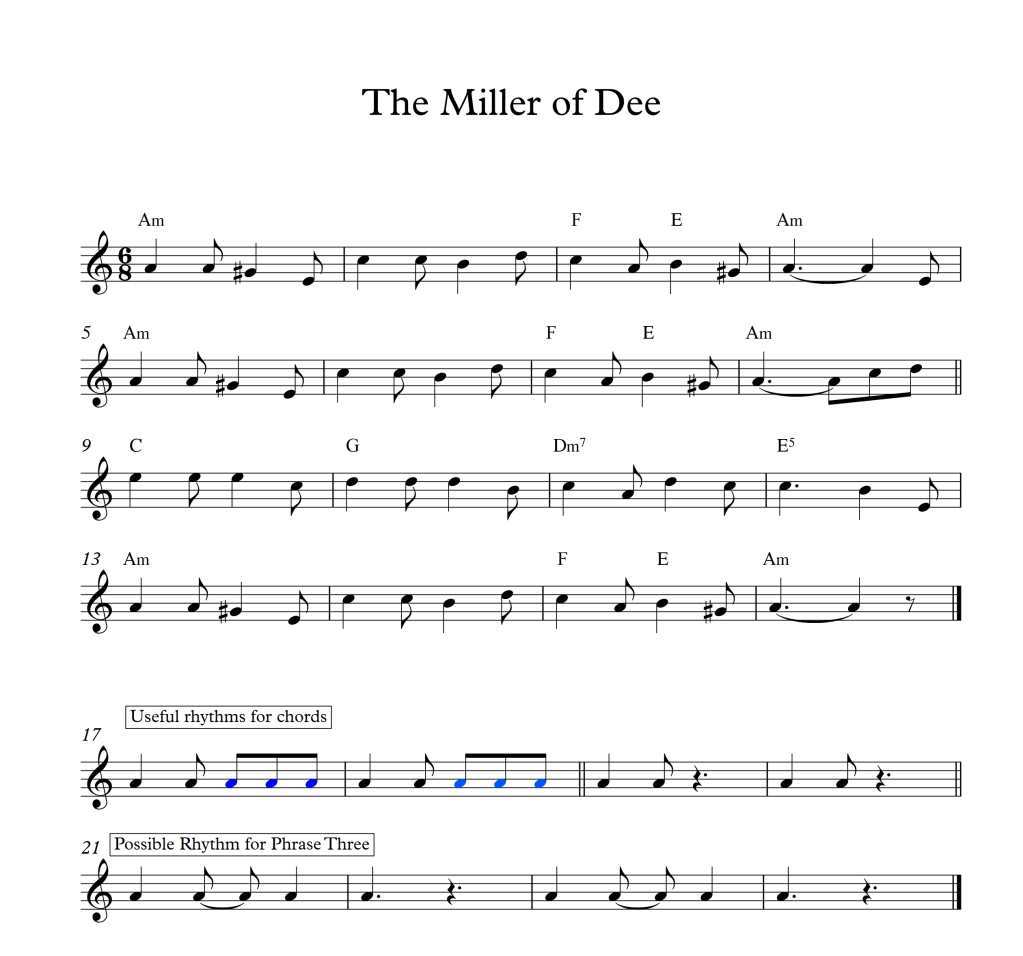
Here is the post for Monday 19th’s tune The Miller of Dee, an English tune/song from the Chester area in the 1700s. We tried various harmonisation options and chord voicings (see chord PDF), and added connecting notes and turns to the melody.

Finally got the videos to upload! Here’s the melody, with the harmony below.
And here’s the harmony:
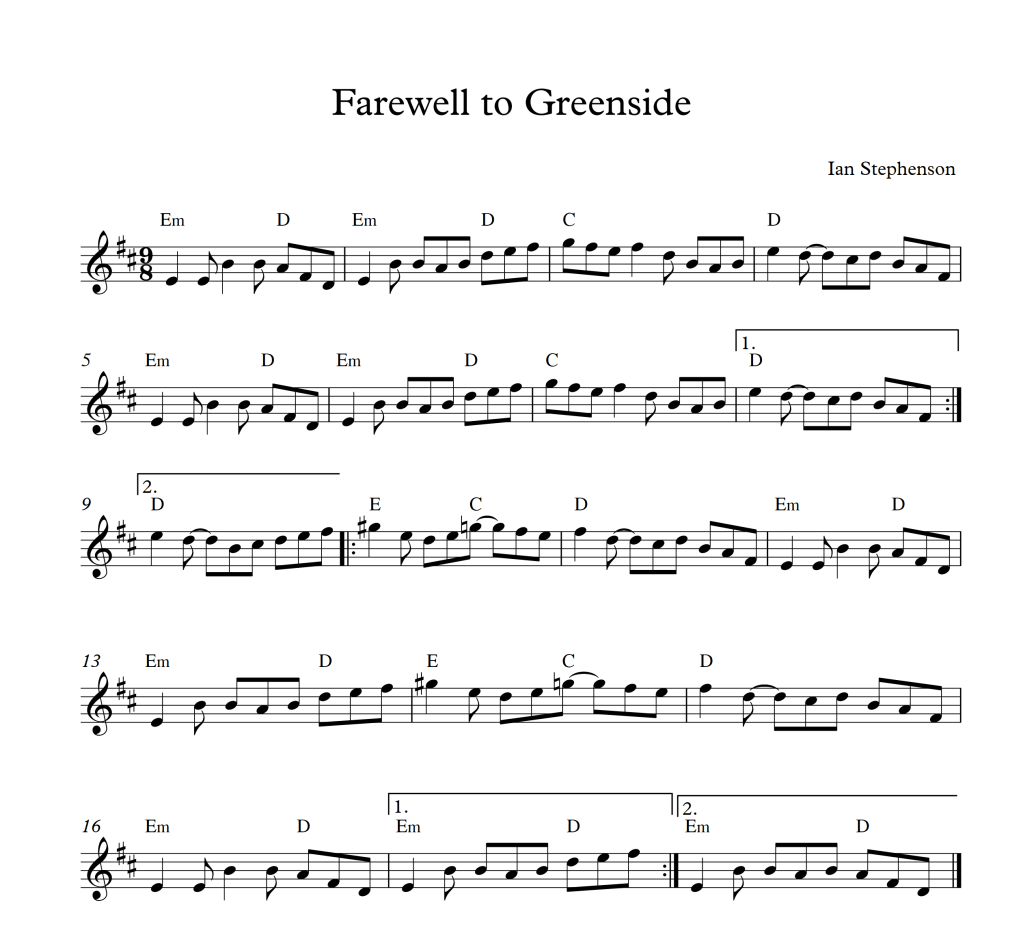
Here is the complete tune from Monday, Ian Stephenson’s Farewell to Greenside. I have tweaked the chords a little! This tune has some tied notes/syncopation as a feature, so will compliment the rhythm work we’ve done in recent weeks.

Here is the PDF
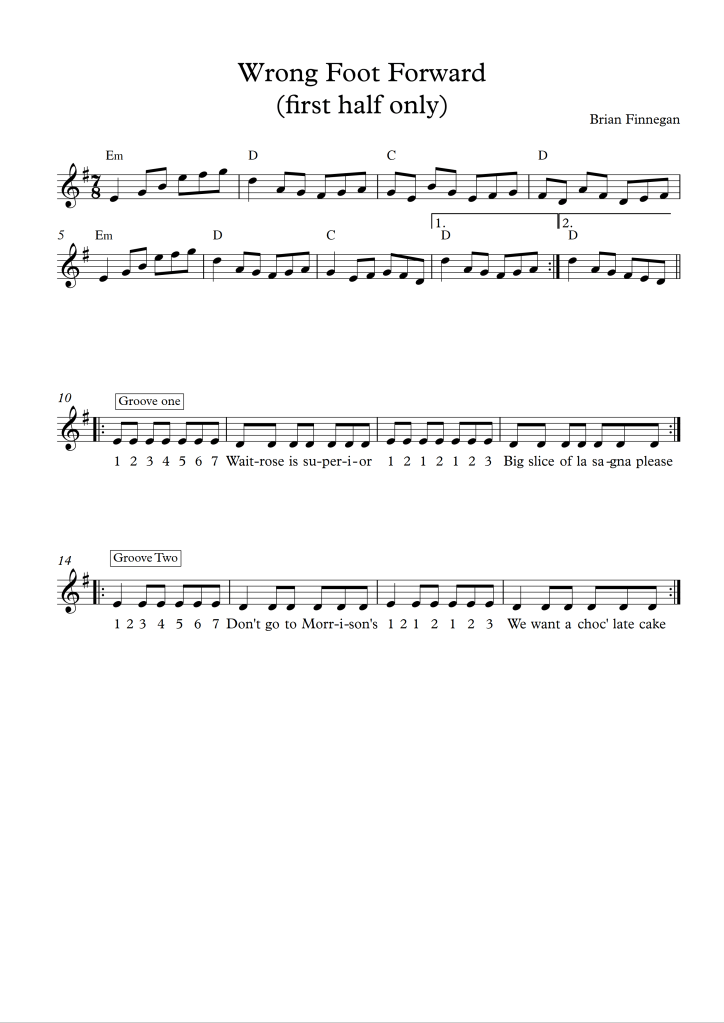
This week saw us tackle the second half of our Flook tune, Wrong Foot Forward.
Here are the dots, with a little simplification to help to learn the shape of the tune. We’ll fill those spots in later, as shown in the PDF!

The PDF gives the full tune with chords, uke pattern and the groove rhythms that we layered up.
I can’t get the video to upload tonight, so I’ve have another go tomorrow!
Here is today’s tune, the first half of a fantastic tune by whistle player extraordinaire Brian Finnegan. Brian is a member of the band Flook – check out their live performance of this tune below! Their music can be found on Apple Music and Spotify, but if you enjoy their work then please consider supporting them by buying a CD or download.
Here are the dots to the first half of the tune – we will work on this next week and learn the second section. I’ve also included the groove rhythms with the 7/8 counting, complete with numbers and silly words (and no offence to any supermarkets reading these!).

We are now finishing up the idea of creating a new tune based on an old one – we took Balance the Straw (Fieldtown) and first turned it from major to minor. We then identified some small melodic shapes and tried substituting one for another. This is a method you can use to create melodic variation, as well as using it to transform a tune. Everyone in the class volunteered a element of variation and I stitched them together to create a new tune. I referenced the dotted rhythm that was put into the B section in the A section to unify the two sections. The dots below show the original transposition, examples of the substitutions and the tweaked tune that is the final result (subject to class approval!).

Here’s what the new version sounds like:
The new version has been dubbed Drop the Grass (Acton), in reference to its original inspiration. Here are the suggested chords:
Here is the development of Uncle Bernard’s, transposing the tune down a minor third to the relative minor of E minor. Since the tune starts and finishes on the tonic (G in G major or E in E minor) and moves mostly in small intervals, we were able to move it down without making very many changes – we only tweaked bar 30 (middle of the B section), bringing the melody down to an E rather than sticking on the G. In the video below I have included the version notated and then a version without the adjustment.
This new version can be played as a complete tune in its own right, or added to the end of the major version as C and/or D sections.

Here is a PDF:
Here are the videos and dots from Monday’s class – a remake/recycling of a Playford tune called Jamaica, that has been christened Remaica (thanks to Bob for that little bit of punning gold!). The idea of re-imagining a tune is something we’re going to look into over the next few weeks. This version is in D Dorian mode – the original can be found at the bottom of the post for comparison!
Here are the dots:

Here is a PDF of Remaica, and another of the original tune Jamaica:
And finally, a video of the original tune, Jamaica, in its original tuning of F major.