Here is the post for Monday 21st October tune, The Grand Hornpipe, also known as Henry Stables’ Grand Hornpipe, The Devonshire Lads and known in Wales as Mympwy Portheinon. It seems to have been revived from a Cumbrian collection of tunes from the late nineteenth century, and is popular in England and Wales. Here’s the video:
And here are the dotes (PDF available here), with some of the rhythmic variations we tried out on the night. The quavers are swung, and the bowings/slurs are a slighly simplified version of what I tend to do in hornpipes to avoid running out of bow!
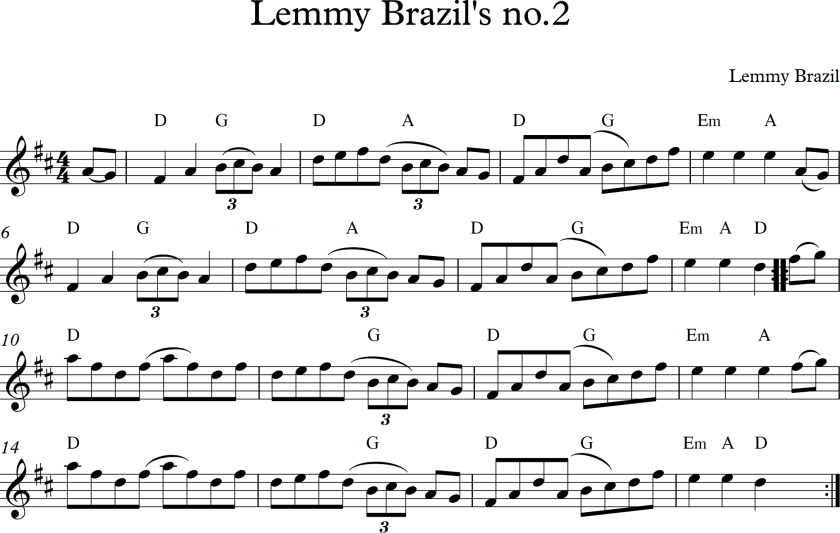
Lemmie Brazil (short for Lementina which seems to be spelled variously as Lemmy or Lemmie, and Brazil is pronounced Brazzle) was a melodeon player and singer from a large Gypsy family who travelled throughout England and Ireland. You can read more about her here and she can be heard playing melodeon here:
Here is the video from Monday 14th October:
And here are the dots, also available as a PDF here:
Here is the tune from 7th October’s class: The Doctor. It’s a tune from Aird’s Airs and Melodies Book of tunes from England, Scotland and Ireland but I’ve also found it in the 1823 Jackson manuscript from Wyresdale, Lancashire.
Here is the tune from Monday 30th’s session, with apologies for the late posting. This is a tune by Peter Barnes, it can be found in the book “The Portland Collection: Contra Dance Music in the Pacific Northwest”. Peter says of this tune: “I actually wrote this tune on the fiddle when I was trying to teach myself that instrument in the mid ‘70’s. I made it easy to play on the violin, which may account for its totally unexpected popularity. Since then it’s been recorded eleven times (usually without my permission!) and has had two dances choreographed to go with it.”
Here’s the tune from Monday 23rd’s session; The Buffoon, a Morris tune from Adderbury. We’re playing it as a session tune because that’s how I know it, rather than at dance speed! It’s a great tune to play around with as there’s lots of scope for variation.
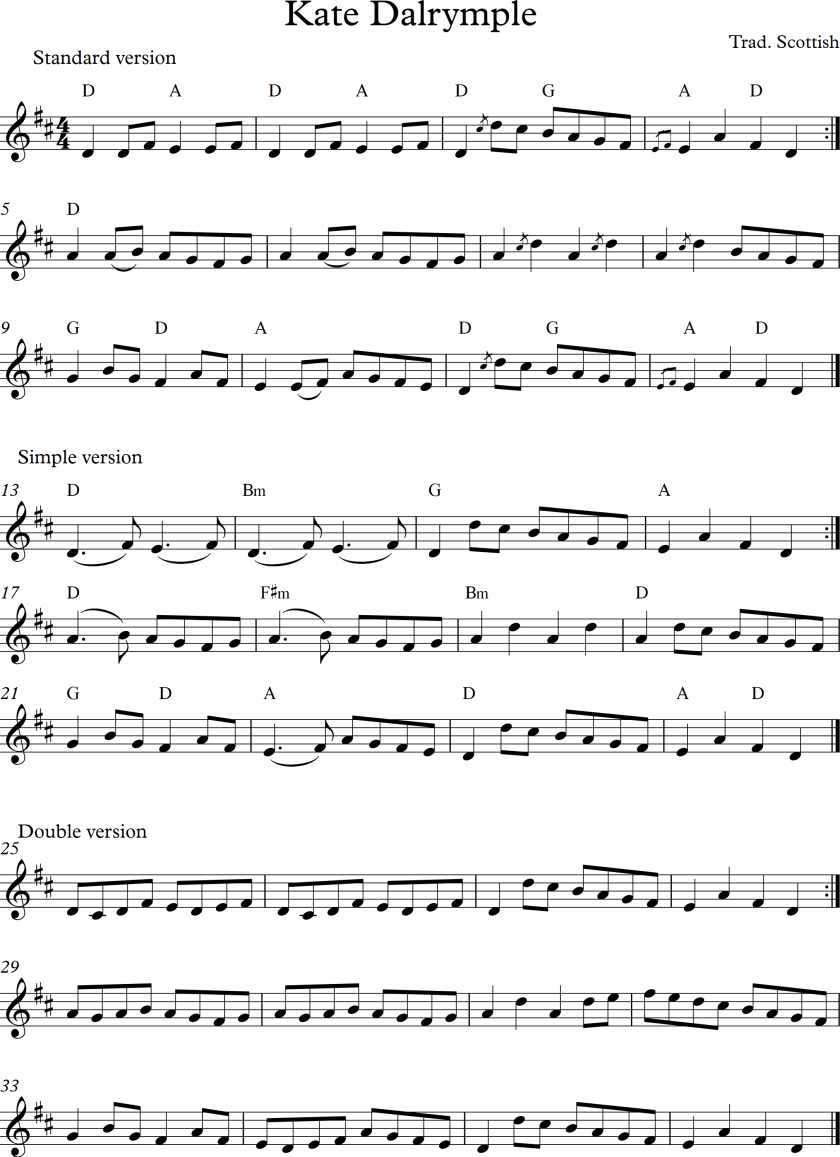
Here are the dots, with two lots of suggested variations – the idea, as with Kate Dalyrmple, is to have simpler and more complex versions and then to mix them up in different ways.
Our first tune of the term! Kate Dalrymple is a fabulous tune from Scotland, Mary D has found the following information on it: Kate Dalrymple is a traditional Scottish reel dating back to the late 1700s, also known as The Highland Laddie, The New Highland Laddie and Jingling Johnnie. There are accompanying words in Scots written by William Watt telling the tale of the eponymous spinster, with an amazing recording of The Corries to be found at http://scotsongs.blogspot.com/2009/04/kate-dalrymple-words-william-watt-1792.html. This tune is used by the BBC as the theme music for the BBC Radio Scotland dance music programme “Take the Floor”.
The assertion that our Kate was a socialite painted by Gainsborough should be taken with a pinch of salt, as no such person was ever painted by the artist though he did paint a Grace Dalrymple Elliot twice.
Here is the video, with the variations covered in Monday’s session:
Here are dots: the idea is to learn the standard, simple and double versions, and then to mix up the phrases to create variety within the tune. We also played with extending the descending scale in the B part, to mirror the similar shape in the A section. I’ve put the two guitar patterns under the standard and simple versions of the tune for convenience, and a PDF can be found here. If played for dancing then it should be played AAB, but we played it as AABB as the B part is so fantastic!
This is Maggie in the Woods, a fabulous polka from Ireland, but again one’s that’s put its boots on and travelled the world! It will go in a set with Battered Hake and then Tralee Gaol.
This is Mount Hills, from the Playford collection.
Here’s the video of the tune played slowly:
And then the tune played at speed, in the higher and lower registers:
Here are the dots, with the chords from memory so apologies if they aren’t what we had on the day, I will change them if necessary! The PDF is available here.
Here’s a fab tune from the Playford collection. Mary D has done some research and says: “Jack o’ Lent was a tradition in England in the 15th, 16th and 17th centuries involving the abuse and burning of a straw effigy during the season of Lent, ending with its burning on Palm Sunday. The effigy, made of straw or stuffed clothes, was abused and stoned on Ash Wednesday while being dragged about the parish.”





 New Ealing Sessions